How Do You Clean Sterling Silver Faith Pendants?

Last Updated: October 24, 2026
Quick Summary
To clean sterling silver pendants, start with mild dish soap and warm water for routine maintenance, use a silver-polishing cloth for moderate tarnish, and apply a baking soda paste for heavy buildup. Avoid harsh chemicals, abrasive materials, and aggressive scrubbing, especially on pendants with gemstones, enamel, or nano-engraved details.
- Soak your pendant in warm soapy water for 5-10 minutes, then gently rub with a soft cloth and rinse thoroughly.
- A silver-polishing cloth removes moderate tarnish quickly without chemicals and lasts a long time with occasional washing.
- Baking soda paste works for stubborn tarnish but is too abrasive for enamel, gemstones, or glued components.
- Store pendants in a zip-top bag or lined box with an anti-tarnish strip to prevent tarnish between cleanings.
- Establish a monthly cleaning routine with soap and water, quarterly polishing, and annual deep cleaning to maintain shine.
Table of Contents
- Why Cleaning Sterling Silver Faith Pendants Matters
- What You'll Need Before You Start
- How to Clean Sterling Silver Jewelry with Mild Dish Soap
- How to Remove Tarnish from Sterling Silver Pendants
- Best Silver Cleaner for Sterling Silver Jewelry
- What Not to Use When Cleaning Faith Pendants
- Sterling Silver Jewelry Care and Storage
- Establish a Cleaning and Maintenance Schedule
- Frequently Asked Questions
Why Cleaning Sterling Silver Faith Pendants Matters
Sterling silver faith pendants often hold deep spiritual meaning and are worn daily, exposing them to moisture, sweat, and air. Over time, this causes tarnish, a dark layer that builds on the surface.
Tarnish isn't permanent damage, it's a natural reaction between silver and sulfur in the air, but it dulls the shine and obscures intricate details like engravings or nano-engraved Biblical text.
Regular cleaning keeps your pendant looking its best and extends its life. If you own a Nano Faith Gold Diamond Pendant Necklace With Kjv Bible Nano Chip, a Nano Faith Infinity Necklace, or a Nano Faith Tree Of Life Necklace, cleaning becomes even more important.
What You'll Need Before You Start
Gather these supplies first, having everything ready makes cleaning faster and more effective.
For basic cleaning:
- Warm water
- Mild dish soap
- Soft cloth (cotton or microfiber work best)
For removing heavy tarnish:
- Baking soda
- Soft-bristled toothbrush
- Silver-polishing cloth
What to avoid having nearby:
- Harsh chemicals or abrasive cleaners
- Rough cloths or paper towels
- Anything with bleach
How to Clean Sterling Silver Jewelry with Mild Dish Soap
The Basic Soap and Water Method
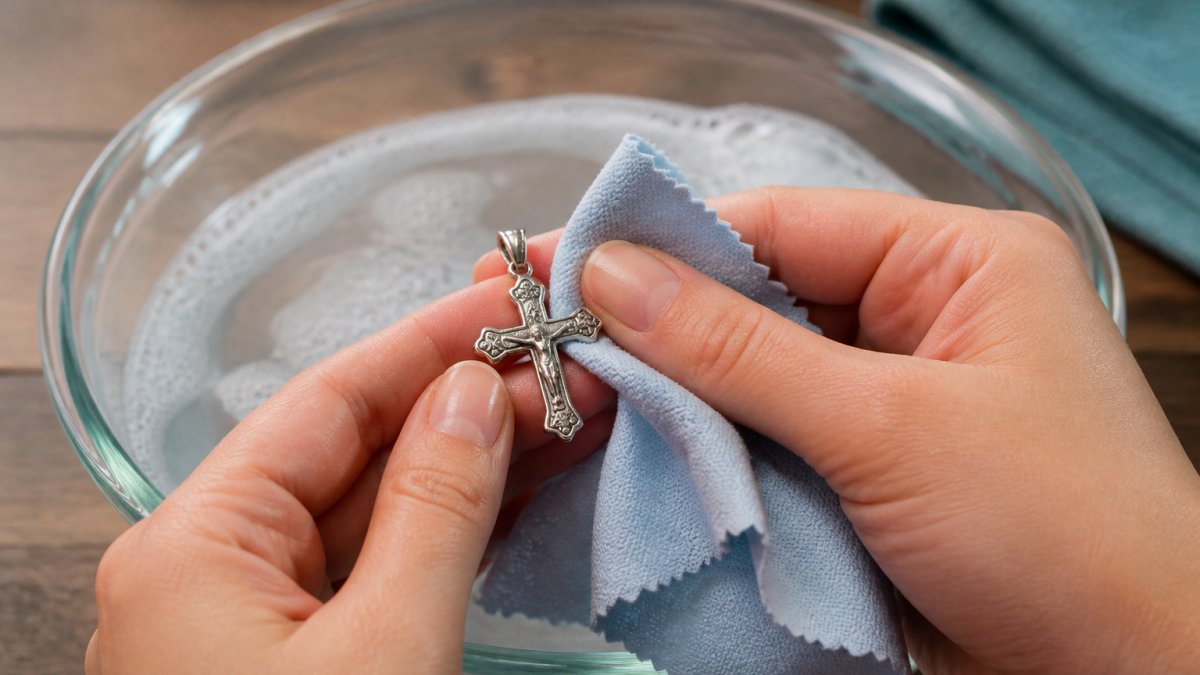
Mild dish soap and warm water is the gentlest way to clean sterling silver pendants, ideal for light tarnish and routine maintenance.
Here's the step-by-step process:
- Fill a small bowl with warm water (not hot)
- Add a few drops of mild dish soap
- Place your pendant in the solution
- Let it soak for 5-10 minutes
- Gently rub the pendant with a soft cloth
- Rinse under clean running water
- Dry completely with a soft cloth
Use gentle pressure, you're removing dirt and oils, not forcing tarnish away.
Pay special attention to crevices and chain links, where dirt accumulates, working the cloth in gently.
Cleaning Pendants with Gemstones or Enamel
Some faith pendants include gemstones, enamel details, or glued components. These require extra care because water can damage certain materials.
Check your pendant first for glued stones or settings, enamel coating or paint, and delicate engravings or raised details.
For enamel details, the same approach applies, enamel can crack from extreme temperature changes or excessive water, so keep it quick and gentle.
Never use baking soda or polishing cloths on enamel, these abrasives damage the finish.
How to Remove Tarnish from Sterling Silver Pendants
Using a Silver-Polishing Cloth
A silver-polishing cloth is designed for this job, containing special compounds that remove tarnish without harsh chemicals.
Here's how to use one:
- Hold your pendant in one hand
- Gently rub the cloth across the surface
- Use light to medium pressure
- Work in one direction, not circular motions
- Flip the cloth to a clean section as it darkens
- Repeat until the shine returns
- Rinse with water and dry
Polishing cloths work quickly and are especially effective for moderate tarnish on smooth surfaces.
Be careful with delicate engravings, the cloth can catch on raised details.
One polishing cloth lasts a long time, even when dark and dirty, it still works.
The Baking Soda Method for Heavy Tarnish
Baking soda is effective for stubborn, heavy tarnish, more effort, but strong results.
Follow these steps:
- Mix baking soda with a small amount of water to form a paste
- Apply the paste to your pendant using a soft cloth or soft-bristled toothbrush
- Gently rub in circular motions
- Pay attention to crevices where tarnish hides
- Rinse thoroughly under running water
- Dry completely with a soft cloth
Use gentle pressure. Baking soda is mildly abrasive, so aggressive scrubbing can scratch the silver surface.
Rinse multiple times after using baking soda, residual paste dries chalky, so remove all traces before drying.
Don't use baking soda on pendants with enamel, gemstones, or glued components, it's too abrasive.
Best Silver Cleaner for Sterling Silver Jewelry
The best cleaner depends on your situation. For routine maintenance, mild dish soap and water are ideal.
For moderate tarnish, a silver-polishing cloth is best, it removes tarnish quickly without chemicals and works well on smooth surfaces.
For heavy tarnish, baking soda paste offers strong, affordable results on most sterling silver pieces.
Start with soap and water, move to a polishing cloth if needed, and use baking soda only for stubborn tarnish.
What Not to Use When Cleaning Faith Pendants
Most cleaning guides hand you a list of things to avoid and stop there. That is not enough for a faith pendant, because the right answer depends on what it is made of and how it is finished. Use this section as a decision guide, not a scare list.
The short list of never-use items
These are unsafe for any sterling silver faith pendant, regardless of finish:
- Bleach and chlorine. They pit the silver surface and can turn it gray or black. Even diluted household bleach is a no.
- Ammonia-based glass or surface cleaners. Ammonia attacks the alloy and can discolor the metal.
- Scouring pads, steel wool, and paper towels. They leave micro-scratches that dull the shine permanently.
When foil and baking soda are actually fine, and when they are not
The aluminum foil and baking soda bath (hot water, baking soda, salt, foil) is a real method, but not universal. It works by a galvanic reaction that moves sulfur off the silver and onto the foil, fine for plain sterling silver with no stones, enamel, or glued parts. It is a bad idea when:
- The pendant has glued stones or cabochons, heat and soaking can soften adhesive.
- The pendant has enamel, paint, or resin fills, thermal shock can craze or crack them.
- The pendant has oxidized (darkened) recessed details you want to keep, the bath strips patina along with tarnish, flattening the contrast.
If any of those apply, skip the foil bath and use the soap-and-water method instead.
When a chemical dip is acceptable
Commercial silver dips are fast and effective on plain sterling silver. They are also the most aggressive option on this page. Reserve them for:
- Plain sterling silver pendants with no stones, no enamel, no glue, and no intentional patina.
- Pieces where a polishing cloth has already failed on stubborn tarnish.
Never dip a pendant with pearls, opals, turquoise, or other porous stones, dips can bleach or etch them. Never dip a piece with oxidized details you want to preserve.
The decision rule
Ask three questions before choosing a method:
- Are there stones, enamel, glue, or a finish I want to keep? If yes, stay with mild soap and water.
- Is the tarnish light, moderate, or heavy? Light: soap and water. Moderate: polishing cloth. Heavy on plain silver: baking soda paste or foil bath.
- Is the piece sentimental, antique, or of unknown construction? If yes, stop and have a jeweler assess it before you clean.
A note on nano-engraved and oxidized details
Faith pendants often carry nano-engraved Scripture text or darkened recessed designs, the reason the piece matters, and the first thing aggressive cleaning destroys. Abrasive pastes and polishing cloths work on high spots, rounding off fine engraving and stripping the dark oxidation that makes the design readable. For these pieces, soap and water plus a soft cloth is the only choice that preserves the design.
Sterling Silver Jewelry Care and Storage
Cleaning gets the attention, but storage determines how often you have to clean. Tarnish is a surface reaction between silver and sulfur in the air, so limit air exposure, limit moisture, and keep pieces from scratching each other.
Store the chain and pendant separately
Most tarnish and residue collects in the clasp, jump rings, pendant bail, and chain links, and storing a pendant on its chain traps dampness and skin oils there. Take the pendant off the chain when you can, store the chain flat or hanging to prevent kinks, and if you keep them together, fasten the clasp so the chain doesn't tangle and scratch the pendant.
Protect oxidized details and intentional patina
Many faith pendants use oxidized, intentionally darkened, recessed areas to make engraved text or a design stand out. That contrast is a finish, not dirt. Two storage habits protect it:
- Do not store oxidized pieces against polishing cloths. Polishing cloths are impregnated with compounds that keep working on whatever they touch. Wrap oxidized pendants in a plain soft cloth instead.
- Keep anti-tarnish strips in the box, not against the piece. Anti-tarnish paper and strips absorb sulfur from the air; place them in the compartment, not wrapped around the pendant.
Use the right container
A zip-top polyethylene bag with the air pressed out is a practical, low-cost option, and a lined jewelry box works if it closes well. Avoid open dishes and fabric rolls, which let air circulate freely, and never store silver in a bathroom, shower steam and humidity accelerate tarnish faster than almost anything else in a home.
Handle heirloom and antique faith pieces conservatively
If a pendant is inherited, antique, or of uncertain construction, defer cleaning. Old pieces may have glued settings, repaired clasps, or a patina that is part of their value. A jeweler can tell you whether it is sterling, plated, or a mix, and whether cleaning would help or hurt.
A simple storage routine
- Wipe the pendant with a dry soft cloth after each wear to remove skin oils.
- Let it air-dry fully before storage, never bag a damp pendant.
- Store in a zip-top bag or lined box with an anti-tarnish strip in the compartment.
- Keep chains separate and clasps fastened.
- Recheck monthly; if you see dulling, a quick polish stops it from becoming heavy tarnish.
Learn more about caring for your pendant with our guide on How to Polish Nano Engraved Pendants Safely. It covers related techniques for maintaining nano-engraved details.
Establish a Cleaning and Maintenance Schedule
Weekly: If you wear your pendant daily, do a quick visual inspection.
Monthly: Give your pendant a gentle wash with soap and warm water.
Quarterly: Use a silver-polishing cloth to restore shine.
Annually: Do a deeper cleaning with baking soda paste if needed.
Consider exploring the differences between materials with our article on Gold vs Silver Scripture Jewelry: Pros and Cons.
Keeping your sterling silver faith pendant clean is straightforward.
A simple routine keeps your pendant looking its best without requiring much effort.
| Frequency | Task | Purpose |
|---|---|---|
| Weekly | Visual inspection | Look for visible dirt or discoloration |
| Monthly | Gentle wash with soap and water | Remove sweat, oils, and dust |
| Quarterly | Use silver-polishing cloth | Restore shine and keep tarnish minimal |
| Annually | Deep cleaning with baking soda paste | Handle stubborn tarnish buildup |
Frequently Asked Questions
Does Dawn dish soap clean sterling silver faith pendants?
Yes, mild dish soap like Dawn works well for routine cleaning of sterling silver pendants. Mix a few drops with warm water, soak the pendant for 5-10 minutes, then gently rub with a soft cloth and rinse thoroughly. Avoid hot water, which can damage delicate details or gemstones. This method is safe for nano-engraved text and religious engravings when done gently.
How do you clean a sterling silver pendant without damaging its engraving?
Use a soft microfiber cloth or cotton cloth with mild soap and warm water. Avoid abrasive scrubbing, stiff toothbrushes, or chemical dips near engraved areas. For nano-engraved faith pendants, the engraving sits on the surface and benefits from gentle care. Skip aluminum foil methods and baking soda pastes if your pendant has delicate engravings; stick to soap, water, and polishing cloths instead.
What should you not use to clean sterling silver?
Avoid harsh chemicals, bleach, abrasive powders, rough cloths, and high-pressure water. Do not use aluminum foil or baking soda paste on pendants with gemstones, enamel, glued components, or oxidized details meant to be preserved. Skip commercial chemical dips if your pendant has sentimental value or delicate religious details. Stiff-bristled toothbrushes and scouring pads can scratch or wear away intentional patina.
How often should you clean a sterling silver faith pendant?
Light maintenance with a soft cloth every 1-2 weeks keeps shine and prevents heavy buildup. Deep cleaning with soap and water every 4-6 weeks works for daily wear. If you wear your pendant in the shower or during exercise, clean it monthly to remove moisture and body oils. Store it in a dry place between cleanings to slow tarnish formation and extend the time between deep cleans.
