Gold vs Silver Scripture Jewelry: Pros and Cons

Table of Contents
- Gold vs Silver Jewelry: A Scripture Jewelry Comparison
- What the Bible Says About Gold and Silver
- Sterling Silver Christian Jewelry: Purity, Plating, and What the Label Means
- Gold Scripture Jewelry: Finishes, Purity, and Price
- Durability and Wear Under Tension
- Gold and Silver Jewelry Care: Tarnish, Skin Sensitivity, and Daily Wear
- How to Choose: A Decision Guide by Wearer and Occasion
- Frequently Asked Questions
Last Updated: October 6, 2026
Gold vs Silver Jewelry: A Scripture Jewelry Comparison
Choosing between gold and silver for scripture jewelry comes down to three things: how often you will wear it, how much you want to spend, and whether you prefer warm or cool tones against your skin.
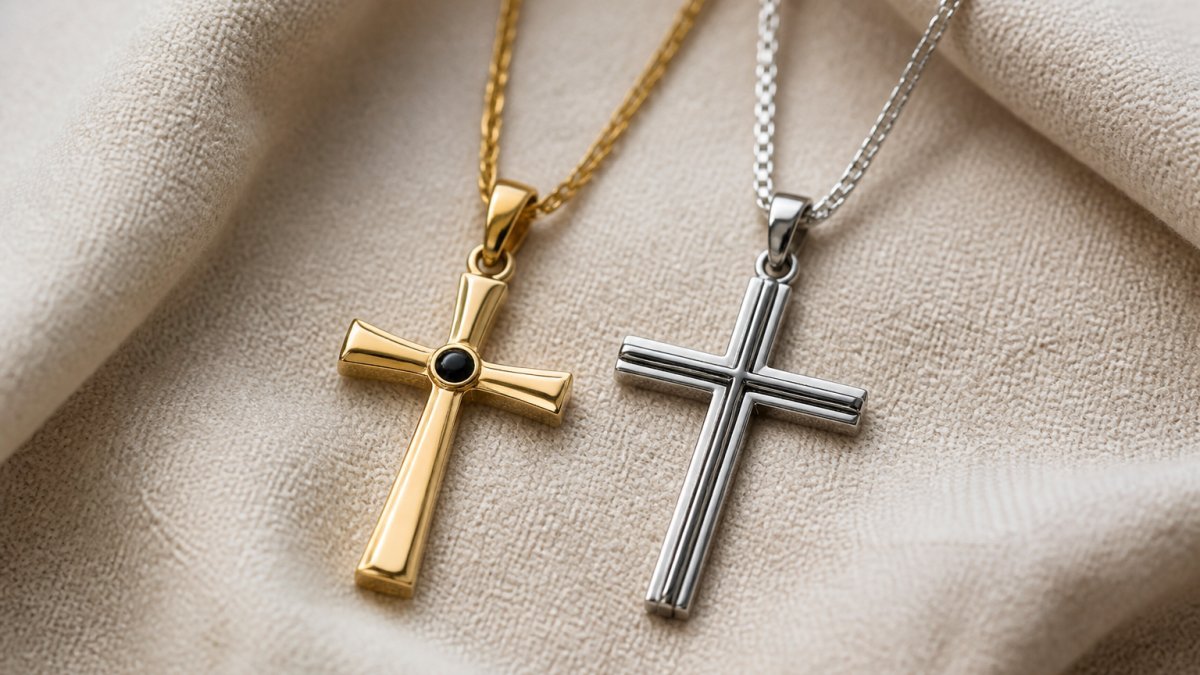
Gold and silver are both precious metals named throughout Scripture, yet they behave very differently in daily wear. Gold resists tarnish and holds its color for years.
Below, we compare the two across symbolism, purity, durability, care, and price, then give you a simple decision guide by wearer and occasion.
| Factor | Gold | Silver |
|---|---|---|
| Tone | Warm, yellow or rose | Cool, bright white |
| Tarnish | Resists tarnish | Tarnishes over time |
| Price for faith jewelry | Higher | Lower |
| Care needs | Low | Regular polishing |
| Best for | Daily wear, gifts | Budget, layering |
What the Bible Says About Gold and Silver
Scripture treats gold and silver as the two standard measures of value, and it uses both as tests of the heart. Gold is tied to glory, the temple, and kingship. Silver is tied to redemption, commerce, and, in some passages, betrayal. That difference matters when you pick a metal for a cross pendant or a ring.

Gold and Silver Side by Side in Scripture
Both metals appear together often, and the passages are specific enough to check:
- Exodus 35 and 36 record the freewill offering for the tabernacle, where the people brought gold, silver, and bronze for the work.
- 1 Kings 10 describes the wealth of Solomon's court in gold and silver, with silver counted as common as stone during his reign.
- Proverbs 16:16 and Proverbs 22:1 rank wisdom and a good name above silver and gold.
The takeaway for jewelry buyers: neither metal is presented as spiritually superior. What Scripture praises is a purified heart, not a particular finish.
Why Silver Carries a Mixed Reputation
Silver's reputation is genuinely mixed, and the passages that create the tension are easy to name:
- Matthew 26:15 records the thirty pieces of silver paid to Judas, the passage most responsible for silver's shadow in Christian reading.
- Zechariah 11:12-13 supplies the thirty pieces of silver imagery that Matthew echoes.
- Against that, Exodus 30:11-16 ties the half-shekel silver ransom to atonement, and Numbers 18:16 sets the redemption price at five shekels of silver.
That tension is worth naming rather than avoiding. Many wearers choose silver precisely because it holds both meanings: value and cost, purity and price paid. Gold carries its own mixed record, from the golden calf in Exodus 32 to the gold of the temple furnishings, which is a useful reminder that the metal itself is never the point.
Search specific gold and silver passages in a public Bible translation
Sterling Silver Christian Jewelry: Purity, Plating, and What the Label Means
Sterling silver Christian jewelry is 92.5% pure silver mixed with 7.5% copper or another metal for strength. That is what "925" means on a stamp.
Read the label carefully, because "silver" alone is not a purity claim. A piece may be:
- Sterling silver (925): 92.5% silver, solid throughout, will tarnish but can be polished back.
- Silver-plated: a thin silver layer over brass or copper. Cheaper, and the plating can wear through at high-contact points.
- Stainless steel with a silver-tone finish: durable and tarnish-resistant, but not a precious metal.
For faith jewelry you plan to wear daily, solid sterling or a well-finished steel base will outlast a thin plating. Look for the 925 stamp on sterling pieces, and check whether the chain matches the pendant.
Gold Scripture Jewelry: Finishes, Purity, and Price
Gold scripture jewelry splits into two broad groups: solid gold and gold-finished. Solid gold is measured in karats, with 14K and 18K the most common in the United States.
Gold-finished and gold-plated pieces use a base metal with a gold layer measured in microns. A thicker plating lasts longer.
The price gap is real. Solid gold costs many times more than a plated piece, which is why most gift and everyday faith jewelry uses a plated or stainless base.
Durability and Wear Under Tension
Durability is where gold and silver diverge most in practice. Gold is more resistant to tarnish and corrosion. Silver is softer and more prone to scratching, though sterling holds up fine for pendants and rings that are not under constant stress.
The metal is only half the story. The chain and clasp usually fail before the pendant does.
Clasps, Chains, and Breakage Points
A pendant is only as strong as the chain holding it. The weakest points are the clasp, the jump rings, and any thin link near the bail.
Gold Cross Pendant with Bible Chip SMALL →
- Toggle clasps look elegant but can slip open during movement.
- Magnetic clasps are easy to fasten and gentle on arthritic hands, but a weak magnet releases under tension.
- Lobster and spring-ring clasps are the most secure for daily wear.
If you have had a prayer bracelet or necklace snap before, the culprit was likely a thin chain or a low-grade clasp, not the pendant. Ask about chain gauge and clasp type before you buy, and treat a heavier chain as money well spent.
Gold and Silver Jewelry Care: Tarnish, Skin Sensitivity, and Daily Wear
Gold and silver jewelry care comes down to two habits: keep the piece dry, and store it away from air and other metals.
For silver, a soft polishing cloth restores shine quickly. For plated gold, use a dry cloth only. Abrasive polishes strip plating.
Skin sensitivity is a separate issue. Some wearers react to nickel, which can appear in base metals and alloys.
Daily wear rules that actually help:
- Put jewelry on after lotion, perfume, and sunscreen have dried.
- Remove pieces before showering, swimming, or the gym.
- Store each piece in its own pouch or compartment to prevent scratching.
How to Choose: A Decision Guide by Wearer and Occasion
Pick gold for daily wear and heirloom gifts, and silver for budget, layering, and cool-toned styling. That is the short version. The longer version is a direct comparison by the criteria that actually decide whether you keep wearing the piece.
Gold vs Silver by Decision Criteria
| Criterion | Gold | Silver |
|---|---|---|
| Upfront cost for a faith pendant | Higher; solid gold is the most expensive option | Lower; sterling is the most affordable precious-metal option |
| Tarnish and color hold | Resists tarnish; solid gold holds color indefinitely | Tarnishes with sulfur exposure; polishes back |
| Scratch resistance | Softer pure gold scratches; alloys harden it | Sterling scratches and dents more readily than gold alloys |
| Skin sensitivity | High-karat gold is generally well tolerated | Sterling is generally well tolerated; plated base metals are the usual culprit |
| Care routine | Dry cloth; low maintenance | Polishing cloth; more frequent attention |
| Repairability | Solid gold can be resoldered and refinished for decades | Sterling can be polished and repaired; plating cannot be restored once worn through |
| Visual prominence | Warm tone reads as traditional and formal | Cool tone reads as modern and understated |
| Layering | Mixes well but can dominate a stack | Layers easily with other silver and mixed metals |
Matching the Metal to the Wearer and Occasion
- Everyday wear at work: gold-finished or stainless with a gold tone hides wear better and needs less polishing. A discreet cross pendant or a small disc reads as jewelry first, which suits a professional setting.
- Baptism or confirmation gift: sterling silver or solid gold both work. Silver keeps the price reasonable for a piece a child will grow into.
- Wedding or anniversary: solid gold, or a rose gold plated piece with a protective coating for a warm tone at a lower price.
Skin Tone and Visual Prominence
A common pattern is that warm undertones flatter yellow and rose gold, while cool undertones flatter silver and white gold. This is a styling preference, not a rule, and mixed-metal stacks have made the distinction less rigid. If you want the pendant to read as the focal point of an outfit, a polished silver or high-karat gold finish catches more light than a matte or plated finish.

A Note on Purity, Plating, and Like-for-Like Comparison
The most common mistake in a gold-versus-silver decision is comparing a solid sterling piece to a gold-plated piece and treating the price gap as a metal gap. It is not. Solid gold, gold-filled, gold-plated, sterling silver, silver-plated, and silver-tone stainless are six different products with different lifespans. Compare within a category: solid gold against solid sterling, or plated gold against plated silver.
How the FTC Jewelry Guides define gold, gold-plated, and sterling claims
At LodMud, our Nano Faith pieces cover both directions. The Gold Cross Pendant with Bible Chip SMALL at $95.00 uses a yellow gold-tone finish over brass with a 0.5 micron plating and a protective recoating finish. The Rose Gold Nano Bible Disc Pendant Necklace at $90.00 uses stainless steel with a rose gold ion-plated finish, which resists tarnish and corrosion. If you want a warmer, more decorative option, the Rose Gold Art Deco Cross Pendant with Bible Chip at $155.00 sets pink and clear cubic zirconia around a black Bible chip. For a ring instead, the pink gold bible chip ring at $90.00 uses the same 0.5 micron gold plating with a clear stone halo.

Each piece carries a nano-engraved chip.
Frequently Asked Questions
What does the Bible say about gold and silver?
Scripture mentions both metals often, and usually with different connotations. Gold appears as a symbol of value, glory, and what endures testing, as in 1 Peter 1:7 where faith is compared to gold refined by fire. Silver is tied to redemption and ransom in passages like Exodus 30, but also to betrayal in the thirty pieces of silver. The point for buyers is that neither metal is condemned; both carry layered meaning, so the choice is practical as much as symbolic.
Is gold or silver better for scripture jewelry?
It depends on how you wear it. Gold finishes resist tarnish better and hold up to daily wear with less maintenance, which suits a piece you never take off. Silver costs less, has a cooler tone many people prefer against the skin, and shows detail clearly, but it needs more frequent cleaning. For occasional or layered wear, silver is a practical, budget-friendly choice.
Does sterling silver tarnish more easily than gold?
Yes. Sterling silver is 92.5 percent silver alloyed with copper, and that copper reacts with sulfur in air, sweat, and some fabrics, which causes the dark film called tarnish. Gold is far more resistant. Tarnish is a surface condition, not damage, so a silver piece can be restored with a polishing cloth. Storing silver in an airtight bag and wearing it regularly slows the process considerably.
How should you care for gold and silver scripture jewelry?
Keep both metals away from perfume, hairspray, chlorine, and lotion. For gold-plated pieces, wipe with a soft dry cloth after wearing and avoid abrasive polishes, which can wear through the plating. For silver, use a treated polishing cloth and store the piece in a sealed bag when not worn. Remove jewelry before showering, swimming, or heavy exercise. If your piece has an engraved chip or stone setting, clean around it gently rather than scrubbing the center.
Can you wear gold and silver jewelry together?
Yes, mixed-metal layering is common and reads as intentional when the pieces share a design language. Keep the chain weights and pendant scale similar so neither metal looks like an afterthought, and separate the two metals with a neutral piece if the contrast feels sharp. A gold cross pendant layered with a thinner silver chain works when both are polished and the lengths differ by at least 2 to 3 centimeters.
Gold and silver both have a place in faith jewelry, and the harder question is not which metal is better but which piece you will still be wearing in five years. LodMud builds scripture jewelry around that question, with nano-engraved Bible chips, tarnish-resistant stainless options, and gold-tone finishes backed by a protective coating. Browse the collection and choose the verse, the metal, and the size that fit your life.