Is Nano Engraving Jewelry Waterproof? A Complete Guide

Table of Contents
- Understanding Waterproof vs. Water-Resistant Nano Engraved Jewelry
- How Nano Engraving Technology Works
- Nano Engraved Bible Verse Jewelry Durability and Water Exposure
- Is Gold Plated Jewelry Waterproof and Safe for Daily Wear
- How to Clean Nano Engraved Pendants Without Damage
- Everyday Wearability: Showers, Sweat, and Swimming
- Maintaining Your Nano Engraved Jewelry for Long-Term Wear
- Frequently Asked Questions
Last Updated: September 25, 2026
Understanding Waterproof vs. Water-Resistant Nano Engraved Jewelry
Water-resistant means a piece can handle splashes and brief exposure to water. Waterproof means it's completely sealed against water penetration, even when submerged. Most nano engraving jewelry waterproof claims fall into the water-resistant category rather than fully waterproof.
Nano engravings create microscopic pathways where water can seep into crevices over time. LodMud uses protective coatings and premium stainless steel to maximize water resistance for everyday wear.

They're designed to handle daily moisture like shower spray and sweat.
The material matters too. Stainless steel resists corrosion better than plated metals. Gold-plated pieces are more vulnerable to water damage because the base metal underneath can oxidize if water breaches the plating.
How Nano Engraving Technology Works
Nano engraving uses precision laser technology to etch text at microscopic scale by vaporizing metal. The term "nano" refers to precision scale, not depth, a common misconception affecting waterproofing claims.
The laser-etching process:
A focused fiber laser targets the metal surface and removes material through ablation, rapid heating that vaporizes metal without melting surrounding areas. Engraving depth is controlled between 10-50 microns depending on design and metal type. Too shallow and it fades; too deep and it weakens thin pieces.
The engraving is permanent because material is physically removed, not painted. Unlike surface etching, nano-engraved text becomes part of the metal itself, so it won't fade.
How engraving design affects water resistance:
Micro-grooves become pathways for water and moisture. Fine, closely-spaced lines create more surface area for water than simple shapes. Protective coatings seal grooves and prevent water penetration.
Material interaction with the laser:
Stainless steel absorbs laser energy efficiently, producing sharp engravings. Gold and gold-plated items reflect energy, requiring higher power and risking plating damage. Silver is highly reflective and requires specialized settings. Solid stainless steel produces sharper, more durable engravings than gold-plated versions.
Permanence and longevity:
The engraving is permanent, but the surrounding metal finish determines how long the piece looks new. A nano-engraved Bible verse remains readable for decades, but the metal surface may tarnish or corrode with exposure. The engraving doesn't fade, but the finish requires maintenance.
Nano Engraved Bible Verse Jewelry Durability and Water Exposure
Nano engraved Bible verse jewelry lasts decades with proper care. The engraving is permanent, but the metal finish degrades with repeated harsh exposure.
Stainless steel nano engraved pieces handle water exposure well. They resist corrosion and maintain their finish longer than other metals. Gold-plated versions need more careful handling because the plating can wear through if exposed to frequent moisture, chlorine, or saltwater.
Common durability concerns: plating degradation from sweat and water, micro-corrosion in unsealed grooves, tarnish on silver metals, and scratches from daily wear.
The Gold Nano Bible Heart Pendant Necklace with Crystals features premium stainless steel with gold ion-plating and a scratch-resistant finish, making it durable for everyday wear. The nano Bible chip inside contains the complete King James Version, permanently etched and protected.

Is Gold Plated Jewelry Waterproof and Safe for Daily Wear
Gold-plated jewelry is not waterproof. It's water-resistant at best, and only if the plating is thick, well-applied, and properly maintained. Gold plating sits on top of a base metal (usually brass, copper, or stainless steel), and water can eventually penetrate the plating and cause the base metal to oxidize or corrode.
Understanding plating thickness and durability:
How plating thickness is tested:
Water exposure and plating failure:
Repeated water exposure accelerates plating failure through osmotic pressure (water penetrating pores), galvanic corrosion (water bridging plating and base metal), and salt/chlorine attack. Sweat contains salt similar to seawater, so pieces worn during exercise degrade faster.
Safe and unsafe activities:
Safe: Daily wear, brief showers (under 10 minutes), occasional hand washing, light exercise. Unsafe: Chlorinated pools, saltwater, hot tubs, prolonged submersion (over 30 minutes), heavy exercise, sleeping in the piece with heavy sweating.
What happens when plating fails:
When plating wears through, brass or copper bases oxidize with dark patina; stainless steel resists corrosion but may show discoloration.
Gold Nano Bible Heart Pendant Necklace →
Solid metals vs. plated alternatives:
For nano engraving jewelry waterproof performance intended for frequent water exposure, solid stainless steel or solid gold are superior choices:
- Solid stainless steel: Waterproof for practical purposes; resists corrosion indefinitely; no plating to wear through. The engraving remains sharp and protected.
- Solid gold (10K or higher): Truly waterproof; doesn't corrode or tarnish; lasts a lifetime. Higher cost but no maintenance beyond cleaning.
- Gold-plated over stainless steel: Better than plated brass because the base metal resists corrosion if plating fails; still requires eventual replating.
If you wear nano-engraved jewelry daily in humid conditions, during exercise, or near water, solid stainless steel offers the best balance of durability and affordability. Gold-plated pieces are suitable for occasional wear or low-moisture environments.
How to Clean Nano Engraved Pendants Without Damage
Gentle cleaning keeps nano engraved jewelry looking new and prevents buildup that can trap moisture. The key is using soft materials and mild solutions, nothing abrasive.
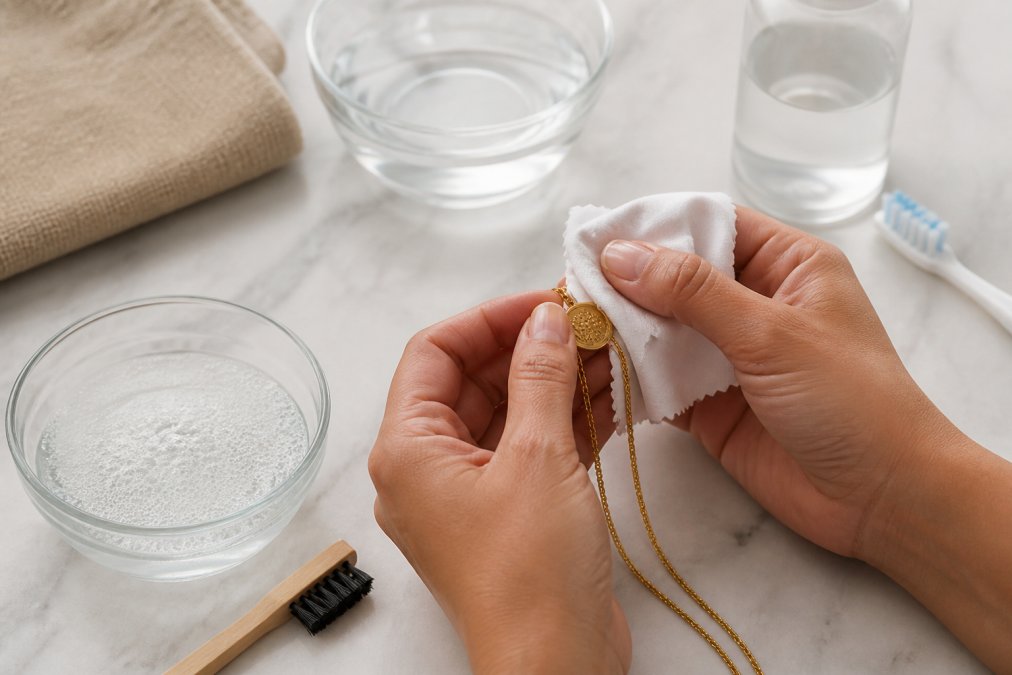
Here's the safest cleaning method:
-
Use lukewarm water and mild dish soap
- Mix a small amount of gentle dish soap with lukewarm water
- Avoid hot water, which can damage plating faster
-
Soak for 2-3 minutes
- Let the piece sit in the soapy water briefly
- This loosens dirt without requiring scrubbing
-
Gently wipe with a soft cloth
- Use a microfiber cloth or soft cotton cloth
- Wipe gently in the direction of the grain if visible
- Never use paper towels or rough fabrics
-
Rinse thoroughly with clean water
- Remove all soap residue
- Soap buildup can dull the finish
-
Dry immediately with a soft cloth
- Pat dry completely
- Don't let water air-dry on the surface
What to avoid:
- Ultrasonic cleaners (can damage plating and loosen stones)
- Chemical cleaners or polishes (strip protective coatings)
- Toothbrushes or abrasive pads (scratch the surface)
- Chlorine or harsh chemicals
- Prolonged soaking (over 10 minutes)
For stubborn tarnish, use a specialized silver cloth gently. Be extra gentle around crystal accents.
Everyday Wearability: Showers, Sweat, and Swimming
Nano engraved jewelry can handle everyday moisture like shower spray and sweat without immediate damage. The question is how much repeated exposure the finish can tolerate before degradation begins.
Showers: Safe. Brief exposure to warm water and soap won't harm the piece. Just dry it afterward. Shower water is not aggressive enough to damage stainless steel or quality plating in the short term.
Sweat: Generally safe, but sweat contains salt and acids that accelerate corrosion over time. If you wear your nano engraved piece during workouts or in hot weather, clean it more frequently. Sweat sitting on the surface for hours speeds up tarnish and plating wear.
Swimming: Depends on the water type.
- Chlorinated pools: Risky. Chlorine degrades plating and can cause discoloration. Remove the piece before swimming or limit to occasional exposure.
- Saltwater: Not recommended. Salt is highly corrosive and will damage plating quickly. Beach wear should be limited.
- Fresh water (lakes, rivers): Lower risk than chlorine or salt, but still not ideal for prolonged submersion.
The Gold Nano Bible Cross Pendant Necklace Medium is designed for everyday wear in normal conditions. It handles daily moisture well but isn't engineered for competitive swimming or beach activities.
Most people successfully wear nano engraved jewelry daily through showers, workouts, and normal life. The key is removing it before activities with harsh chemical exposure and cleaning it regularly.
A simple rule: if you wouldn't wear a regular watch or ring for that activity, don't wear your nano engraved piece either. That's a good baseline for protection.
Maintaining Your Nano Engraved Jewelry for Long-Term Wear
Long-term maintenance keeps nano engraved jewelry looking pristine and extends its lifespan significantly. A few simple habits prevent most common damage.
Storage matters. Keep your nano engraved piece in a dry place away from humidity. A jewelry box or soft pouch works well. Avoid storing it in the bathroom where steam and moisture are constant. If you live in a humid climate, consider a small silica gel packet in the storage container.
Avoid contact with chemicals. Remove your piece before applying lotions, perfumes, or cosmetics. These products can degrade plating and protective coatings.
Frequently Asked Questions
Can you wear nano engraved jewelry in the shower?
Nano engraved jewelry with premium stainless steel construction and protective coatings is generally safe for shower use. The protective finish on the metal prevents water from reaching the nano-engraved chip inside. However, avoid prolonged hot water exposure and dry your jewelry immediately after showering. For gold-plated pieces, limit shower exposure since the plating can gradually wear away with repeated water contact. Pat dry with a soft cloth to prevent water spots.
What is the difference between waterproof and water-resistant nano engraving jewelry?
Water-resistant jewelry can withstand brief water exposure like hand washing and light rain, while waterproof jewelry resists water at greater depths and durations. Most nano engraved jewelry is water-resistant rather than fully waterproof. The nano-engraved chip itself is protected by the metal casing and protective coating, but the metal finish, especially gold-plated surfaces, can be damaged by extended water exposure. Check your specific piece's rating.
How does sweat or humidity damage nano-engraved text?
Sweat and humidity don't directly damage the nano-engraved text because the microscopic engraving is protected inside the metal pendant. However, moisture can cause oxidation and tarnishing on unprotected metal surfaces around the engraving. After workouts or humid conditions, wipe your jewelry with a dry cloth to prevent moisture buildup. Regular cleaning prevents corrosion that could eventually expose the nano-engraved chip.
Is nano engraved jewelry durable enough for everyday wear?
Yes, nano-engraved jewelry is designed for everyday wear when made from quality materials like premium stainless steel with protective coatings. The nano-engraved chip is protected inside the pendant, making it resistant to scratches and impact. The durability depends on the base metal and finish quality. LodMud's nano-engraved pieces use tarnish and corrosion-resistant stainless steel with scratch-resistant finishes, making them suitable for constant wear. Proper care, regular cleaning and avoiding harsh chemicals, extends their lifespan significantly.