Are Nano Engraved Necklaces Waterproof? Care Guide

Table of Contents
- What Does Waterproof Mean for Nano Engraved Necklaces?
- How the Nano-Chip and Pendant Materials React to Water
- Is 18k Gold Plated Jewelry Waterproof? What to Expect
- Nano Engraved Bible Verse Jewelry Durability Over Time
- How to Clean Nano Engraved Jewelry Without Damaging It
- Daily Wear Rules: Showering, Swimming, and Sweat
- Caring for Your Nano Bible Pendant: Practical Steps
- Conclusion: Wear Your Faith Confidently Every Day
- Frequently Asked Questions
Last Updated: September 7, 2026
Whether nano engraved necklaces are waterproof is a common concern. Most quality nano engraved necklaces are water-resistant for daily wear, but "waterproof" depends entirely on materials and construction.
Water safety comes down to two parts: the microscopic nano-chip and the pendant materials protecting it. The chip is resilient, but its long-term survival depends on how well the surrounding metal shields it from moisture, chemicals, and physical stress.
What Does Waterproof Mean for Nano Engraved Necklaces?
True waterproofing means indefinite submersion without water penetration. Most jewelry, including nano engraved necklaces, is better described as water-resistant because metals and seals degrade with constant exposure.
For a nano engraved necklace to survive years of showers and hand washing, the pendant must use corrosion-resistant metals. The pendant housing matters more than the chip itself for water safety.
How the Nano-Chip and Pendant Materials React to Water
The nano-chip is a silicon or glass substrate, typically 5-10 mm in diameter, etched via photolithography. The chip is inert: it does not corrode, dissolve, or react with water. Its vulnerability is physical, water can carry contaminants that abrade the etched surface, or moisture can cause delamination of the protective coating if compromised.
What actually determines water safety is the pendant's internal architecture. In a well-constructed piece, the chip is either:
- Encapsulated in a UV-cured epoxy resin that fully surrounds the chip and is cured to a hard, non-porous state. This resin is the primary moisture barrier.
- Sandwiched between two laser-welded stainless steel plates, creating a hermetic seal that is impermeable to liquid water and water vapor. This is the gold standard for waterproofing.
In budget pendants, the chip is often placed in a recess and covered with a thin adhesive-backed film. That film is the weak point, over time, the adhesive degrades with heat cycles and humidity, creating micro-channels where water can wick in.
The Science of Water Ingress: Why 'Waterproof' Is a Spectrum
Water molecules are approximately 0.275 nanometers in diameter, while a nano-engraved chip's features are typically 1-10 micrometers (1,000-10,000 nanometers) (usgs.gov). Water itself does not 'wash away' the engraving; the real threat is electrolytic corrosion of the metal housing.
When two dissimilar metals are in contact (e.g., gold plating over stainless steel) and exposed to an electrolyte, a galvanic cell forms, accelerating corrosion at the interface. Over months of daily showering, this corrosion creates pinholes in the plating, allowing moisture to reach the adhesive layer holding the chip.
What Competitors Don't Tell You: The Sealant's Lifespan
Most product pages say 'waterproof' without mentioning that the epoxy resin sealing the chip has a finite service life. Industrial-grade epoxy absorbs 0.1-0.5% water by weight over a 24-hour immersion test (ASTM D570) (astm.org). If the resin layer is thin or has air bubbles, moisture can reach the chip's surface within 6-12 months.
Quality manufacturing often applies a two-layer seal: a primary epoxy layer directly on the chip, followed by a secondary polyurethane or silicone overcoat that resists cracking from thermal expansion. This dual-layer approach separates a pendant that survives years of daily showers from one that fails after a few swimming sessions.
The Role of Stainless Steel and Gold Plating
Premium stainless steel (typically 316L surgical grade) forms the backbone of most durable nano engraved necklaces because it contains molybdenum, providing superior resistance to chloride-induced pitting corrosion from saltwater and sweat (bssa.org.uk). When paired with gold plating, the result is beautiful and functional, though plating thickness determines how long the golden finish lasts.
For those asking is 18k gold plated jewelry waterproof, the answer depends on plating quality. 18k gold plating over stainless steel offers excellent water resistance for daily wear, including showers and sweat. However, all gold plating wears thin with friction, so removing your necklace before swimming in chlorinated pools or saltwater extends its life considerably.
Is 18k Gold Plated Jewelry Waterproof? What to Expect
18k gold plated jewelry is water-resistant for normal daily activities but not truly waterproof for indefinite immersion. You can safely shower, wash your hands, and exercise while wearing it, as the underlying stainless steel protects the nano engraved necklace from water damage.
The main concern with gold plating is gradual wear from friction, not water exposure. Rubbing against clothing or other jewelry slowly thins the plating, eventually revealing the stainless steel beneath. To keep the gold finish looking its best, remove your necklace before swimming in pools or the ocean.
Nano Engraved Bible Verse Jewelry Durability Over Time
Nano engraved bible verse jewelry durability is excellent when crafted from corrosion-resistant materials like stainless steel and sealed properly. The nano-chip is protected from physical damage by the metal pendant, making it far more durable than traditional engravings on soft metals.
The longevity of your necklace depends more on the pendant's finish than the chip's integrity. Gold plating will eventually show wear, but the underlying stainless steel and nano-chip will remain intact for years.
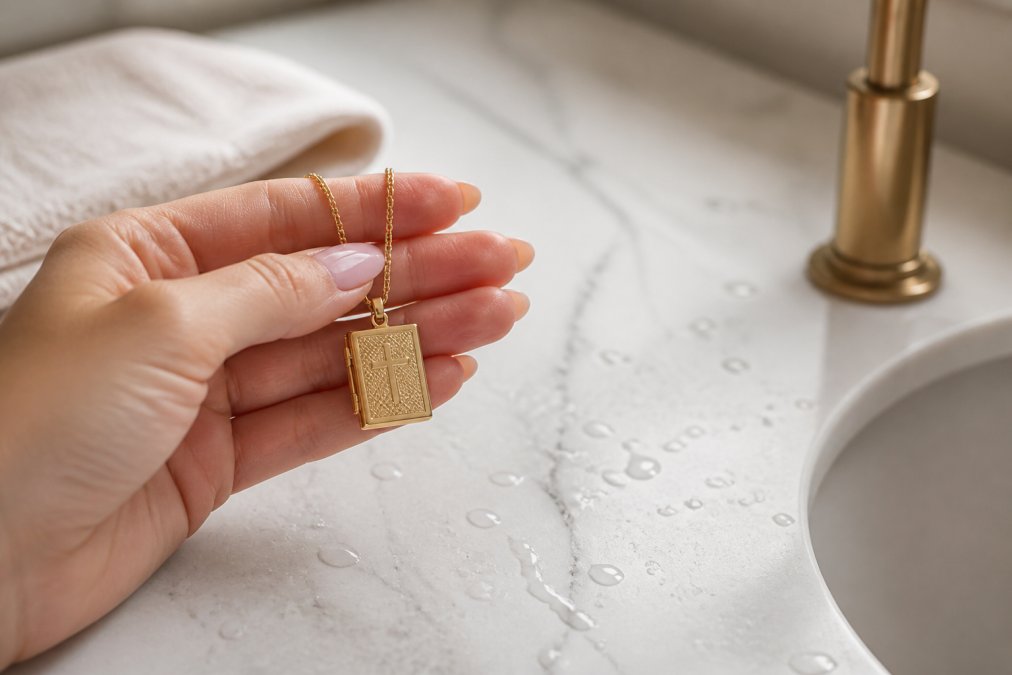
How to Clean Nano Engraved Jewelry Without Damaging It
Cleaning nano engraved jewelry is straightforward when you avoid harsh chemicals and abrasive tools. Use lukewarm water, a drop of mild dish soap, and a soft microfiber cloth to gently wipe the pendant and chain.
Avoid ultrasonic cleaners, steam cleaners, and abrasive polishing cloths, as these can damage the gold plating or compromise the seal around the nano-chip. Never use chlorine-based cleaners, bleach, or ammonia. A simple soap-and-water routine every few weeks keeps it looking new without risking damage.
Daily Wear Rules: Showering, Swimming, and Sweat
For a quality nano engraved necklace, the answer is yes for most situations, with a few sensible exceptions. Showering, hand washing, and sweating during exercise are all safe.
Swimming requires more caution. Chlorinated pool water and saltwater are harsher than tap water and can gradually dull gold plating and stress seals. Remove your necklace before swimming and store it in a dry place.
The Long-Term Chemical Threat: What Water Alone Can't Do
The water is not the primary enemy, the chemicals dissolved in it are. Over a 5-year daily wear period, cumulative exposure to these agents does more damage than any single submersion event:
| Agent | Exposure Source | Mechanism of Degradation | Timeframe for Visible Effect |
|---|---|---|---|
| Chlorine (free available chlorine, 1-3 ppm) | Pools, hot tubs | Oxidizes gold plating at the grain boundaries; accelerates galvanic corrosion at plating/base metal interface | 50-100 hours of cumulative exposure |
| Sodium chloride (salt, ~35,000 ppm) | Ocean water | Chloride ions penetrate micro-pores in plating; causes pitting corrosion in lower-grade stainless steel (304 vs. 316L) | 20-50 hours of cumulative exposure |
| Sulfates and artificial fragrances | Shampoos, body washes | Detergents strip the protective oil layer on plating; fragrances contain ethanol which can soften epoxy sealants | 200-400 wash cycles |
| Urea and lactic acid | Sweat | Creates a mildly acidic micro-environment (pH 4.5-6.5) that accelerates tarnish on non-precious metal underlayers | Continuous during exercise |
| UV radiation | Sunlight through windows | Degrades epoxy resin, causing yellowing and embrittlement; UV exposure is cumulative and irreversible | 1-2 years of daily indirect exposure |
This is why a necklace that is 'fine in the shower' for 2 years can suddenly show plating wear in year 3, the damage is cumulative, not event-driven.
What to Do If the Engraving Fades or the Chip Is Damaged
If your nano-engraved necklace stops displaying clearly under magnification, or if the pendant has visible cracks or water ingress:
- The chip is not user-serviceable. Unlike a traditional engraving that can be re-cut, a nano-chip is a manufactured component. It cannot be re-etched in place.
- Repair is rarely cost-effective. A replacement chip costs $15-$30 in materials, but the labor to open a sealed pendant, replace the chip, and re-seal it typically runs $50-$80. Most manufacturers price a new pendant at $90-$120, making replacement the better value.
- Warranty coverage varies. Some manufacturers offer a 1-year warranty against manufacturing defects (including seal failure), but most exclude water damage from their warranty language, even if they market the piece as 'waterproof.' Read the warranty terms before purchasing.
- If the plating has worn but the chip is intact, the piece can be re-plated by a jeweler for $30-$60. This restores the cosmetic finish without touching the chip, provided the seal was not compromised.
- If water has visibly entered the pendant (you can see moisture or fog under the glass or crystal), stop wearing it immediately. The moisture will continue to corrode the internal metal and will eventually destroy the chip. Some manufacturers offer a 'replacement discount' for damaged pieces, ask customer service before discarding it.
A Practical Decision Framework for Daily Wear
| Activity | Safe? | Why | Precaution |
|---|---|---|---|
| Showering (warm, <5 min) | Yes | 316L stainless steel and quality epoxy handle brief warm water | Rinse pendant with cool water after if you have hard water |
| Showering (hot, >10 min) | Caution | Prolonged heat accelerates epoxy softening | Remove if your water is above 110°F |
| Swimming (chlorinated pool) | No | Chlorine is the most aggressive chemical for plating | Remove and rinse with fresh water if you forget |
| Swimming (ocean) | No | Salt crystals left behind are hygroscopic, they attract moisture | Rinse thoroughly and dry completely if exposed |
| Exercise (sweating) | Yes | Sweat is mildly acidic but 316L steel resists it | Wipe pendant dry after intense workouts |
| Hot tub / sauna | No | Heat + humidity + chlorine = triple threat | Never wear in these environments |
| Daily hand washing | Yes | Brief exposure is harmless | No action needed |
Caring for Your Nano Bible Pendant: Practical Steps
Caring for a Nano Bible pendant is simple with a consistent routine. Store the necklace in a dry jewelry box or pouch when not wearing it, avoiding direct sunlight and humid bathrooms.

For a deeper clean, soak it in lukewarm soapy water for a few minutes, then gently brush around the pendant edges with a soft baby toothbrush to remove buildup. Rinse, dry thoroughly, and buff with a microfiber cloth.
Conclusion: Wear Your Faith Confidently Every Day
A quality nano engraved necklace is built to accompany you through life, not sit safely in a drawer. Stainless steel construction and protective gold plating mean you can shower, exercise, and go about your daily routine without constantly removing your jewelry.
At LodMud, our Nano Bible collection pairs this durable construction with elegant, discreet design, so your faith stays close without compromising on style. Explore our Nano Bible pendant collection to find the Gold Nano Bible Cross Pendant Necklace at $100.00, the Rose Gold Nano Bible Disc Pendant Necklace at $90.00, or the Gold Nano Bible Tree of Life Necklace with Crystal Accents at $100.00, each crafted from premium stainless steel with tarnish-resistant finishes. Get started with LodMud and wear a piece that carries God's Word through every moment of your day.


Frequently Asked Questions
Can I shower with my nano engraved necklace?
Yes, you can shower with your nano engraved necklace. The stainless steel base and protective gold or rose gold plating resist water and won't tarnish from brief exposure. However, to preserve the finish, avoid letting soap, shampoo, or conditioner dry on the pendant. Rinse it with clean water after showering and pat it dry with a soft cloth. This keeps the nano-chip protected and maintains the necklace's shine for years of daily wear.
Will water damage the nano-engraving on the chip?
No. The nano-engraving is etched into a chip that is sealed within the pendant's protective casing. The chip itself does not come into direct contact with water. The stainless steel and plating materials shield the microscopic text from moisture, so swimming, sweating, or washing your hands will not wash away or fade the engraving. The main concern is chemical exposure, such as chlorine or harsh cleaners, which can affect the metal's finish over time, not the nano-chip.
How do I clean my nano engraved jewelry safely?
Use lukewarm water and a few drops of mild dish soap. Dip a soft, lint-free cloth into the solution and gently wipe the pendant's surface. Avoid abrasive pads, brushes, or jewelry cleaners with ammonia, as these can scratch the gold plating. Rinse under running water and dry immediately with a separate soft cloth. For best results, clean your necklace after workouts or exposure to lotions and perfumes to prevent buildup.
How long does the gold plating last on nano engraved necklaces?
With proper care, the gold plating on nano engraved necklaces lasts several years. The base is premium stainless steel, which is naturally corrosion-resistant, and the ion-plated gold finish adds a durable outer layer. To extend its life, remove the necklace before swimming in chlorinated pools, applying harsh chemicals, or sleeping. Wiping it down after wear and storing it separately prevents scratches and keeps the plating intact.