What Do Different Prayer Bead Materials Mean?

Quick Summary
Prayer bead materials carry meanings drawn mostly from faith traditions and personal devotion, not a scientific classification. Wood suggests warmth and humility, stone suggests permanence and strength, and seeds such as rudraksha are tied to specific traditions. Materials also differ in durability, weight and care needs.
- Wood is commonly associated with warmth, humility and a connection to nature.
- Stone is often linked to permanence and strength, but its harder varieties can chip on impact.
- Symbolic meanings vary by faith tradition, so the same material can mean different things.
- Crystal and energy claims about stones are modern interpretations, not documented religious teaching.
- Match the material to how you will use the beads and how much care you can give.
Table of Contents
- Why Prayer Bead Materials Matter
- Wooden Prayer Beads Meaning: Warmth, Humility and Natural Ties
- Stone Prayer Beads Meaning: Permanence and Strength
- Types of Prayer Beads and the Materials Behind Them
- Materials Side by Side: Symbolism, Care and Durability
- What Symbolic Meanings Are Based On
- How to Choose Prayer Beads for Your Practice
- Choosing the Pair of Beads That Fits Your Faith Milestone
- Frequently Asked Questions
Why Prayer Bead Materials Matter
Prayer beads have been used across Christian, Catholic, Orthodox, Muslim, Hindu and Buddhist traditions for centuries, and the material a bead is made from often says as much as its shape. Choosing a bead is rarely only a matter of appearance.
That said, the symbolism you will read about in the sections below comes mostly from long-standing tradition and personal devotion. It is not a scientific classification, and the same material can carry different meanings in different faith communities.
The practical side matters too. A material affects how the beads feel in the hand, how they wear over years of handling, and how much care they need.
Wooden Prayer Beads Meaning: Warmth, Humility and Natural Ties
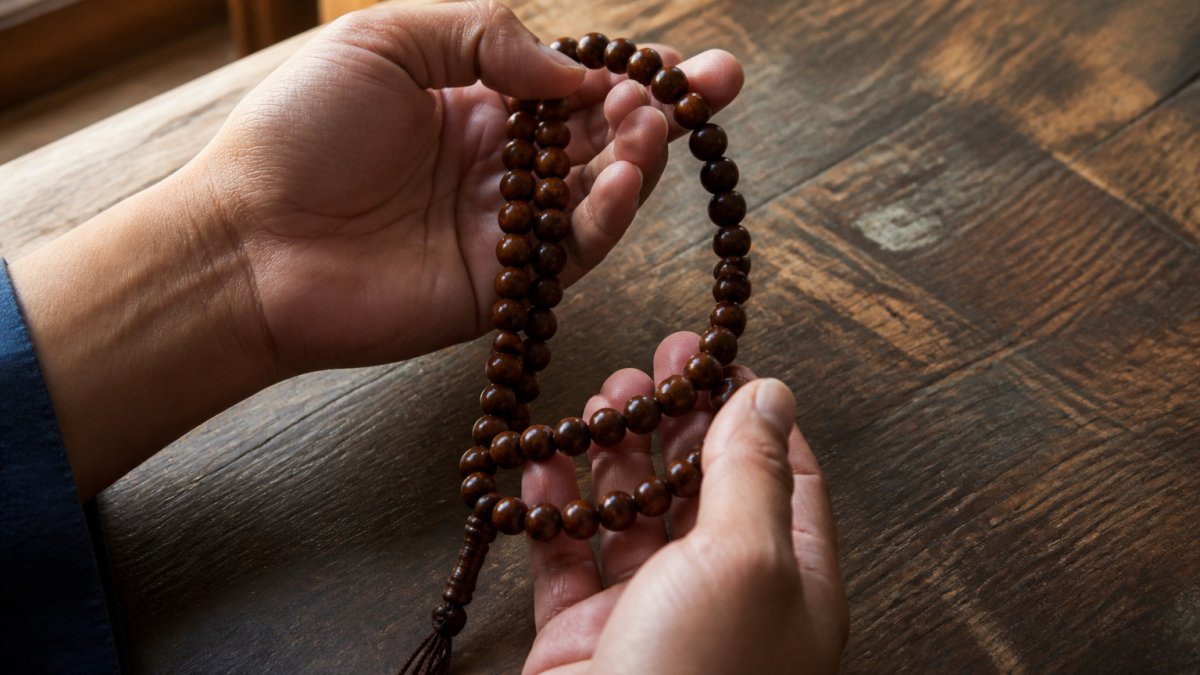
Wooden prayer beads are often associated with warmth, humility and a connection to the natural world. Many people find the grain and gentle weight of wood calming during repetitive prayer, and the material is widely used in both Christian and interfaith devotional practice.
Wood also changes with use.
Stone Prayer Beads Meaning: Permanence and Strength
Stone prayer beads are commonly associated with permanence, steadiness and strength. Because stone is dense and cool to the touch, many people find it grounding during long periods of prayer or meditation. That coolness is a physical property, not a spiritual one, but it is part of why stone feels different in the hand from wood or seed.
The symbolism of stone is also tradition-specific. In Catholic and Orthodox practice, stone is not usually assigned a fixed devotional meaning the way certain woods or seeds are; it is chosen more for durability and beauty. In Hindu and Buddhist malas, specific stones are sometimes linked to particular deities or intentions, but those associations vary by region and lineage.
What Actually Changes How Stone Wears
Stone is not one material. Hardness varies widely, and that variation drives how a strand behaves over years of handling:
- Quartz-family stones such as amethyst, rose quartz and clear quartz are relatively hard and take a good polish, but they can chip at the drill hole if the bead is dropped on a hard floor.
- Softer stones such as malachite, turquoise and howlite scratch and dull more easily and are often stabilized or treated to hold up in jewelry.
- Porous stones can absorb oils, lotions and perfumes, which may darken the surface over time.
A useful rule of thumb: the harder the stone, the more it resists scratching but the more it can crack from a sharp impact; the softer the stone, the more it scratches but the less it shatters. Neither is "better", they fail in different ways.
Care and Skin Contact
Stone beads are generally easy to live with. Wipe them with a soft dry cloth after heavy handling, avoid prolonged soaking, and keep them away from harsh household cleaners, which can dull a polish or strip a treatment.
If you are drawn to the symbolism of stone, the Black Onyx, Blue Sodalite & African Turquoise Natural Stone Bracelet from LodMud combines several natural gemstones with polished stainless steel spacer beads and a durable stretch cord, priced at $32.00.

Types of Prayer Beads and the Materials Behind Them
Prayer beads come in many forms, including the Catholic rosary, the Orthodox prayer rope, the Muslim tasbih, and the Hindu and Buddhist mala. Each tradition uses a bead count and structure suited to its own practice, and the material is usually chosen to match that practice.
Common materials include wood, stone, seeds, glass, metal and pearl. Seeds such as rudraksha and lotus, along with bone and horn, appear in several traditional settings. Glass and metal beads are common in modern jewelry, and their meaning often comes from the maker or the wearer rather than from a long-established tradition.
Because the same material can mean different things in different communities, it helps to ask what a particular tradition itself teaches before reading meaning into a bead.
Seed, Metal and Glass Beads
Seed beads have deep roots in several devotional traditions, and rudraksha in particular is associated with Hindu and Shaivite practice. Metal beads, often silver or gold, are valued for their durability and polish. Glass beads are frequently used in contemporary devotional jewelry, where color and clarity are the main attractions. The meaning of each depends heavily on tradition and personal intention.
Black Onyx, Blue Sodalite & African Turquoise Natural Stone Bracelet →
Materials Side by Side: Symbolism, Care and Durability
The table below compares the most common prayer bead materials on the dimensions buyers actually ask about. Symbolic associations are drawn from devotional tradition and are not a measure of quality. Where a meaning is a modern interpretation rather than a documented tradition, that is noted below the table.
| Material | Common Symbolism | Durability | Weight in Hand | Care Needs |
|---|---|---|---|---|
| Wood | Warmth, humility, natural ties | Good, but sensitive to moisture and heat | Light to medium | Keep dry, avoid heat, re-oil occasionally |
| Natural stone | Permanence, strength | Strong, but can chip on impact | Medium to heavy | Gentle handling, avoid harsh chemicals |
| Seeds | Tradition-specific devotion (e.g., rudraksha in Shaivite practice) | Varies by seed; some crack when dry | Light | Keep dry, avoid heavy wear, inspect for splits |
| Metal | Value, durability, lasting devotion | Very durable | Heavy | Wipe clean, avoid harsh cleaners and chlorine |
| Glass | Color, clarity, personal meaning | Can break if dropped | Light to medium | Store carefully, avoid thermal shock |
| Pearl | Purity, rarity (often modern or cultural) | Soft, scratches easily | Medium | Keep away from perfume and acids, wipe after wear |
Reading the Table Correctly
A few cautions matter more than the rows themselves:
- Symbolism is not universal. Wood does not mean the same thing to a Catholic rosary maker and a Buddhist mala maker. The table gives the most common associations, not a rulebook.
- Durability is about failure mode, not a score. Metal resists wear but bends; glass resists wear but shatters; wood resists impact but warps with moisture. Match the failure mode to how you will use the beads.
- Weight changes the experience. Heavy stone and metal strands feel substantial but can tire the hand during long chanting; light wood and seed strands are easier for extended use.
- Skin contact matters. Metal findings, dyed stones and some seed finishes are the usual culprits in skin irritation, not the base material.
Identifying Common Materials
Most buyers cannot tell materials apart by sight alone, and that is fine, a few simple checks help:
- Temperature: stone and metal feel cool at first touch and warm slowly; wood, seed and glass feel closer to room temperature.
- Weight: stone and metal are noticeably heavier than wood or seed of the same size.
- Surface: glass is smooth and uniform; natural stone usually shows slight variation; wood shows grain; seeds show natural pores or striations.
- Sound: tap two beads gently, glass and stone ring, wood and seed thud.
Sourcing and Sustainability
This is where most guides stop, and it is worth a paragraph. Wood and seed beads raise questions about species and harvest; some woods used in devotional jewelry are slow-growing, and seed supply varies by region. Gemstones raise questions about mining conditions and treatment disclosure. Pearl and shell raise animal-welfare questions for some buyers. None of this has a single answer, but asking a seller where a material comes from and whether it is treated or stabilized is a reasonable, practical step, and it is a question the symbolism alone will never answer.
U.S. Federal Trade Commission guidance on jewelry and gemstone marketing claims
What Symbolic Meanings Are Based On
Symbolic meanings for prayer bead materials rest on a mix of sources: religious teaching, cultural practice, and personal experience. Some associations, such as the use of rudraksha in Hindu devotion, are documented in traditional texts and ongoing religious practice. Others, such as the idea that a particular stone has a specific spiritual effect, are popular beliefs without a scientific basis.
When you read a claim about a material's meaning, it is worth asking where it comes from. A meaning rooted in a faith tradition's own teaching carries different weight than a meaning that appears only in marketing copy. Our advice is to look for the tradition behind a symbol before you treat it as settled.
How to Choose Prayer Beads for Your Practice
Choosing prayer beads starts with three questions: what your tradition or practice calls for, how you plan to use the beads, and how much wear they will take.
- Identify your tradition's bead form. A rosary, mala, tasbih or prayer rope each has its own count and structure.
- Decide how often you will handle them. Daily use favors durable materials such as stone or metal.
- Consider how you will wear or carry them. Bracelets suit discreet, everyday devotion, while longer strands suit focused prayer.
- Match the material to the care you are willing to give. Wood and glass need more attention than metal or stone.
Many people find that a bracelet worn daily is an easy way to keep a prayer practice close, and LodMud's Christian jewelry for daily prayer offers that kind of everyday option.
Choosing the Pair of Beads That Fits Your Faith Milestone
Milestones such as baptisms, confirmations and weddings are common reasons to choose a meaningful piece of prayer bead jewelry. For these occasions, look for a material and design that the recipient will likely wear and value over many years.
The Picture Jasper Disc Beaded Bracelet with Stainless Steel Lion Accent is priced at $39.00 and is a sturdy option for a man marking a personal milestone.
Before you buy for a milestone, check the size, the material and how the piece will be worn in daily life, because the most meaningful gift is the one the recipient actually uses. You can also read through baptism gift ideas for girls for occasion-focused suggestions.
Frequently Asked Questions
What are the different types of prayer beads?
Prayer beads come in several named forms. The Catholic rosary has 59 beads in five decades, the Islamic tasbih is commonly a 33-bead string used for dhikr, and the Hindu and Buddhist mala usually has 108 beads. Each form is tied to its own tradition and counting method, so the right type depends on the practice you follow. Materials such as wood, stone, seed and metal can appear across all of these forms, so choosing a type and choosing a material are separate decisions.
What do different prayer bead materials symbolize?
Materials are often associated with particular qualities. Wood is commonly linked with humility and a connection to nature, stone with permanence and strength, and seeds such as rudraksha with traditions of devotion. These associations vary by culture and are not universal doctrine, so they should be understood as tradition-specific interpretations rather than fixed rules. Where you read a symbolic meaning, check whether it comes from a religious teaching, a craft tradition or a seller's description.
How should I choose prayer beads for prayer or meditation?
Start with the practice itself: the number of beads your prayer uses, the feel of the strand in your hand, and how often you will carry it. Wood is light and warm to hold, stone is heavier and more durable against daily wear, and metal or glass suits a more formal setting. Consider your daily routine and whether you need discreet jewelry or a traditional strand.
How do I care for prayer beads made from natural materials?
Natural materials respond to moisture, oils and sunlight. Wipe wooden beads with a dry or slightly damp cloth and avoid soaking them, since water can warp or crack wood.
