How to Maintain Prayer Beads: A Complete Care Guide

Table of Contents
- Understanding Prayer Beads and Their Structure
- How to Maintain Prayer Beads: Daily Care Essentials
- How to Cleanse Mala Beads and Prayer Strings
- Material-Specific Maintenance
- Repairing Broken Prayer Beads and Restringing
- Charging and Consecration Rituals
- Preventing Common Damage and Wear
- Conclusion
Last Updated: August 25, 2026
Understanding Prayer Beads and Their Structure
Prayer beads are devotional tools used across spiritual traditions to facilitate meditation, mindfulness, and ritualistic prayer. Each bead represents one complete cycle of recitation, serving as a physical counter for mantras, prayers, or affirmations.
Prayer beads typically consist of beads strung on cord or thread with specific counts varying by tradition. Most mala beads contain 108 beads, considered sacred in Eastern spiritual practices (peer-reviewed research). Rosaries often feature 59 beads arranged in groups for Christian prayer cycles (vatican.va). Spacer beads or metal accents mark sections, while a larger guru bead sits at one end as the starting and ending point.
The cord is the most vulnerable component, subject to fraying and breaking with regular use. Beads made from wood, stone, crystal, or bone each require different care approaches. Metal spacers can tarnish if exposed to moisture or harsh conditions.
LodMud recognizes that prayer beads and faith-inspired jewelry require thoughtful maintenance to preserve both their physical integrity and spiritual purpose. Whether you're working with traditional mala beads or modern devotional accessories like the Infinity Pendant with Bible Chip, understanding materials and construction methods helps you keep them in pristine condition.

How to Maintain Prayer Beads: Daily Care Essentials
Maintaining prayer beads starts with how you handle and wear them daily. Regular use creates wear patterns you can minimize with intentional care habits.
Handling and Wearing
The most common cause of damage to prayer beads is rough handling. Avoid wearing your beads during activities that expose them to excessive stress or moisture, showering, swimming, and intense exercise compromise both the cord and beads. Many practitioners keep a separate pair for meditation and spiritual practice, reserving their primary beads for intentional use rather than constant wear.
When handling your beads during meditation, use a gentle grip. Pulling the cord taut or twisting it repeatedly strains the fibers and accelerates fraying. Store your beads in a dedicated fabric pouch or box when not using them, signaling that these are sacred objects deserving of respectful storage.
Storage Best Practices
The ideal storage environment is cool, dry, and dark. Exposure to direct sunlight fades colors and weakens certain materials. Humidity causes wood to swell and metal to oxidize, while temperature fluctuations stress the cord.
Keep your beads in a breathable fabric pouch rather than plastic. Plastic traps moisture and prevents air circulation, creating conditions for mold and mildew on natural materials. Avoid storing prayer beads in bathrooms, kitchens, or other high-moisture areas. A bedroom closet, drawer, or meditation space provides better conditions. In humid climates, consider storing beads in a small box with a silica gel packet to absorb excess moisture.
Check your stored beads monthly for signs of damage, discoloration, or cord weakness.
How to Cleanse Mala Beads and Prayer Strings
Cleansing prayer beads serves both practical and spiritual purposes. Physically, it removes dust, oils, and debris that accumulate during use. Spiritually, many traditions view cleansing as a way to refresh the energy and intention embedded in your beads.
Water Cleansing Method
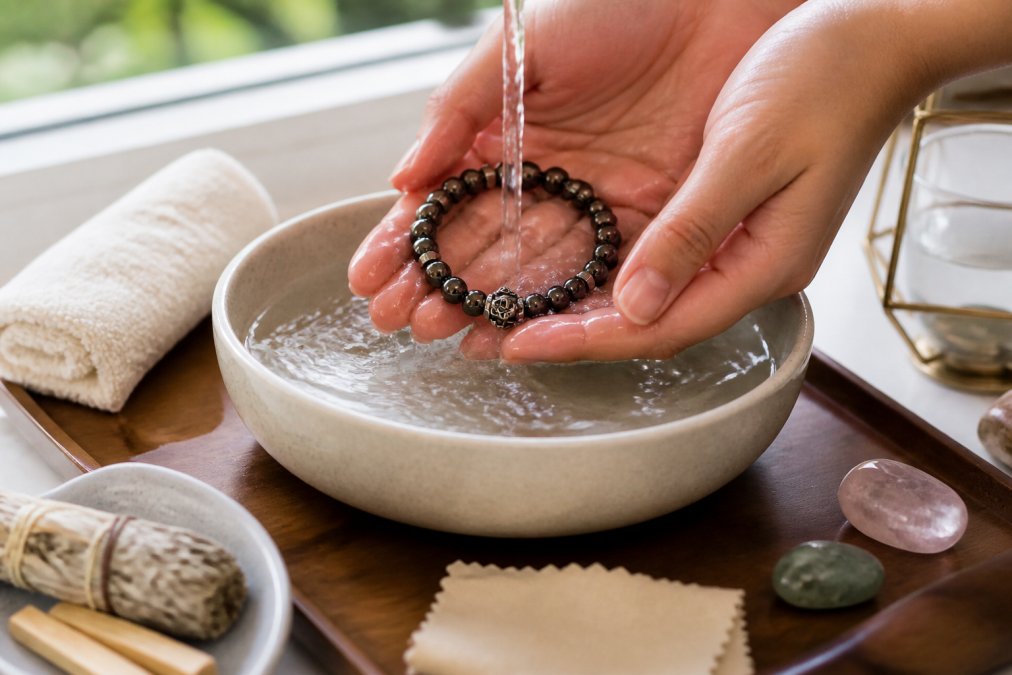
Fill a small bowl with lukewarm water and add a single drop of mild dish soap. Submerge your beads for 5-10 minutes. Using your fingers, gently rub each bead to remove accumulated oils and dust. Rinse your beads thoroughly under running water, ensuring all soap residue washes away. Pat your beads dry immediately with a soft, lint-free cloth. Do not leave them wet or allow them to air dry, as moisture sitting on the cord creates conditions for mold growth and cord deterioration.
Dry Cleansing Techniques
For beads that shouldn't contact water, particularly wooden beads or those with delicate finishes, use a soft-bristled brush or soft cloth to gently brush each bead, removing surface dust and loosening debris trapped between beads.
Moonlight bathing is a traditional cleansing practice in many spiritual traditions. Place your beads on a windowsill or outside where they're exposed to moonlight overnight. Smoke cleansing using sage, palo santo, or incense is another traditional approach. Pass your beads slowly through the smoke several times, rotating them so all surfaces receive exposure.
Material-Specific Maintenance
Different bead materials require different care approaches.
Wooden Beads
Wooden beads require careful moisture management. Excessive water exposure causes wood to swell, potentially cracking the bead or warping its shape. Use dry cleansing methods as your primary approach. If your wooden beads accumulate stubborn grime, use a barely-damp cloth sparingly, wring out excess water, wipe quickly, and dry immediately.
Wooden beads benefit from occasional conditioning to prevent drying and cracking. Once or twice per year, apply a tiny amount of food-grade mineral oil or coconut oil to a soft cloth and gently rub each wooden bead. Store wooden beads in a location with moderate humidity, away from direct sunlight.
Stone and Crystal Beads
Stone and crystal beads are durable and tolerate water well. Hard stones like quartz, amethyst, and jade tolerate water cleansing and gentle brushing. Softer stones like turquoise, lapis lazuli, and selenite require more care and should use dry cleansing or barely-damp cloth methods rather than full water submersion.
Some crystal and stone beads are naturally porous and can stain easily. Avoid exposing these beads to colored liquids, strong perfumes, or anything that might leave a mark. Store stone and crystal beads in a cool, dark location away from radiators, heating vents, and direct sunlight.
Metal Accents and Spacers
Metal spacers, guru beads, and decorative accents introduce maintenance considerations. Silver and silver-plated accents tarnish when exposed to air and moisture. Keep metal accents dry and store your beads in a low-humidity environment. If tarnishing occurs, polish silver gently with a soft cloth or specialized silver polishing cloth.
Gold-plated and brass accents also oxidize with exposure to moisture and sweat. Wipe the metal accents dry after use to slow oxidation. Stainless steel accents are the most durable option and resist tarnishing and oxidation effectively.

Repairing Broken Prayer Beads and Restringing
Eventually, even well-maintained prayer beads may need repair. A broken cord or cracked bead doesn't mean your beads are ruined; restringing is a straightforward process that restores them to full function.
When to Restring Your Beads
Several signs indicate that restringing is necessary. If the cord shows visible fraying, stretching, or discoloration, replacement is overdue. If you notice individual beads becoming loose or rattling when you move the string, the cord has likely weakened and needs replacement.
The frequency of restringing depends on how often you use your beads. Beads used daily for meditation might need restringing every 1-2 years. Beads used occasionally might last 3-5 years before the cord weakens. Regular inspection helps you catch problems before they become severe.
Step-by-Step Restringing Process
Restringing prayer beads is a meditative process that many practitioners find meaningful.
Materials needed:
- Silk thread or nylon cord (0.8-1mm diameter for most beads)
- Beading needle or thin needle that fits through your beads
- Small scissors
- Optional: beeswax or thread conditioner to strengthen the cord
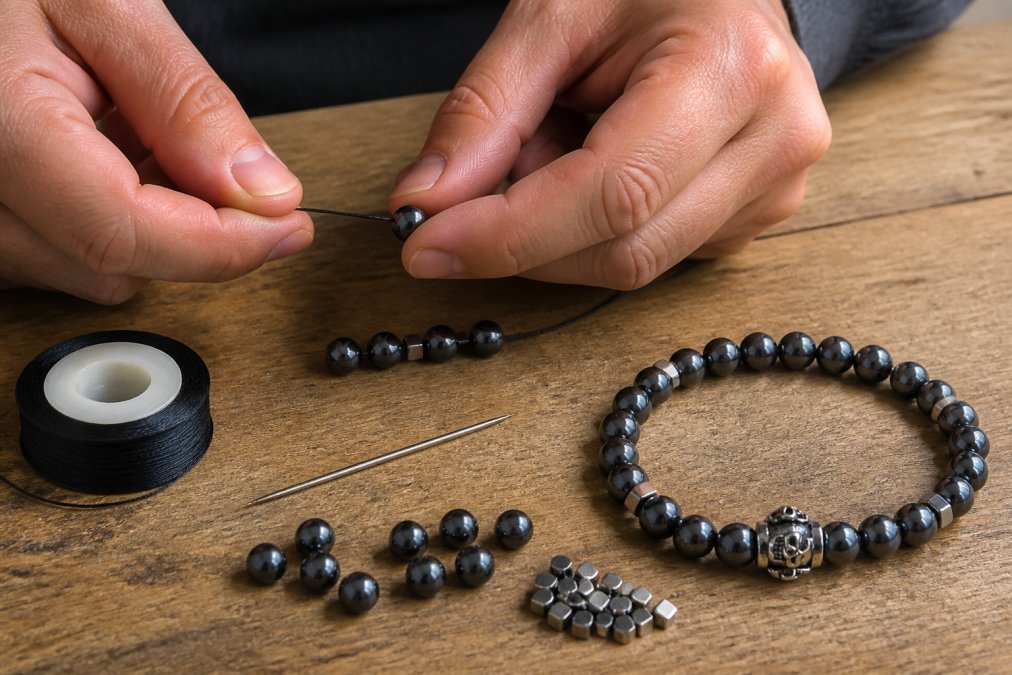
Step 1: Prepare your workspace. Lay out all your beads in the order they appeared on the original string. If you're replacing a damaged bead, have your replacement ready.
Step 2: Cut your stringing material. Cut a length of thread or cord about 2-3 times the length of your finished beads. If using silk thread, you can condition it with beeswax to increase strength and prevent fraying.
Step 3: Thread your needle. Insert the thread through your needle, leaving a 3-4 inch tail. Tie a knot at the end of the tail to prevent beads from sliding off.
Step 4: Begin stringing. Starting with your guru bead or the first bead in your pattern, carefully thread each bead onto the cord. Move slowly and deliberately, ensuring each bead seats fully on the cord.
Step 5: Maintain consistent tension. Keep the cord taut but not so tight that it strains. The beads should sit close together without gaps.
Step 6: String spacer beads and accents. When you reach section markers or spacer beads, string them in their original positions.
Step 7: Complete the circle. When you've strung all beads, tie the two cord ends together with a secure knot. You can use a square knot or surgeon's knot. Leave a small loop if your beads originally had one, or tie the ends together if they were originally connected in a circle.
Step 8: Secure the knot. Apply a tiny drop of clear nail polish or thread sealant to the knot. This prevents fraying and keeps the knot from loosening over time. Allow the sealant to dry completely before using your beads.
Step 9: Test the restring. Gently pull on your beads in different directions to ensure the knot is secure and beads don't slide.
The entire restringing process typically takes 30-60 minutes depending on the number of beads and your familiarity with the process.
Charging and Consecration Rituals
Beyond physical maintenance, many traditions include spiritual practices to refresh the energy and intention of prayer beads.
Moonlight charging is one of the most accessible approaches. Place your beads on a windowsill or outside under the full moon overnight. Sunlight charging works similarly but uses solar energy. Place your beads in sunlight for a few hours during the day, though use caution with wooden beads or delicate materials that may fade.
Sound cleansing using bells, singing bowls, or chanting is a traditional approach in many Eastern spiritual practices. Ring a bell near your beads or play a singing bowl while holding your beads. Intention setting is a personal practice where you hold your beads and consciously state or visualize your spiritual purpose for them. Choose charging and consecration practices that resonate with your spiritual tradition and personal beliefs.
Preventing Common Damage and Wear
Understanding how prayer beads typically fail helps you prevent problems before they occur.
Cord fraying happens when cord fibers separate and unravel. Handle your beads gently, store them properly, and avoid excessive moisture. If fraying begins, seal the cord ends with a tiny drop of clear nail polish or thread sealant.
Bead cracking occurs when beads experience stress or temperature changes. Prevent cracking by handling beads carefully and avoiding sudden temperature changes. Discoloration happens when beads absorb oils, moisture, or environmental pollutants. Regular dry cleansing prevents most discoloration.
Metal oxidation and tarnishing are inevitable with exposure to air and moisture, but you can slow the process dramatically by keeping metal accents dry and storing beads in low-humidity environments. Loose beads indicate cord weakness. If you notice beads moving independently on the cord, restringing is necessary. Mold and mildew develop in high-humidity environments or when beads are stored while damp. Prevent this by ensuring beads are completely dry before storage and storing them in breathable containers in dry locations.
Prayer beads deserve the same thoughtful care you give to any meaningful spiritual tool. By understanding your beads' materials, handling them with intention, and addressing problems early, you'll keep them in excellent condition for years of practice. Whether you're working with traditional wooden mala beads, crystal rosaries, or modern faith-inspired pieces like LodMud's Cross Pendant Imperial Pave with Bible Chip, these maintenance practices protect both the physical integrity and spiritual significance of your devotional tools. Start with basic daily care habits, establish a regular cleansing routine, and restring your beads when needed, these simple practices ensure your prayer beads remain a reliable companion for your spiritual practice for decades to come.

Frequently Asked Questions
Q: How do I cleanse my prayer beads spiritually and physically?
A: Cleanse prayer beads using running water and a soft cloth for physical cleaning, or use dry methods like moonlight exposure for spiritual cleansing. For mala beads specifically, hold them under cool running water while setting an intention, then pat dry with a clean, soft cloth. Many practitioners also cleanse by placing beads under moonlight overnight or using smoke from sage or incense. The method depends on your material, delicate wooden beads need gentler handling than stone or crystal beads.
Q: What should I do if the string on my prayer beads breaks?
A: If your prayer beads break, gather all beads immediately to prevent loss. Remove the remaining string and inspect each bead for damage. Use waxed thread or fishing line to restring, tying a knot after every 3-5 beads for durability. Start with the guru bead, then add beads in order. Secure the final knot with a small dab of clear nail polish or thread sealant.
Q: How do I prevent my prayer beads from tangling while traveling?
A: Store prayer beads in a dedicated pouch or small cloth bag to prevent tangling during travel. Coil them loosely rather than wrapping tightly, and keep them separate from other jewelry. A small velvet or silk bag protects both the beads and your other belongings. Some travelers use individual compartments in a jewelry organizer. Avoid storing beads in plastic bags, which can trap moisture and cause oxidation on metal accents or damage to delicate materials.
Q: Can I wear my prayer beads while showering or exercising?
A: Most prayer beads are not designed for constant water exposure, though some materials are more water-resistant than others. Wooden beads absorb moisture and can warp or develop mold, so remove them before showering. Stone and crystal beads handle water better but can still suffer from prolonged exposure. Metal accents may oxidize or tarnish with repeated water contact. For daily wear during exercise, consider a stretch-fit bracelet design like the Hematite Beaded Bracelet with Stainless Steel Buddha Accent, which uses durable materials better suited to active wear.
This article was written using GrandRanker