Durable Faith Bracelets for Daily Wear: A 2026 Guide

Table of Contents
- What Makes a Faith Bracelet Durable for Daily Wear
- Best Materials for Everyday Jewelry
- Waterproof Christian Bracelets for Active Lifestyles
- How to Clean Stainless Steel Religious Jewelry
- Choosing the Right Bracelet Size and Fit
- Styling Durable Faith Bracelets for Everyday Wear
- Frequently Asked Questions
Last Updated: September 23, 2026
What Makes a Faith Bracelet Durable for Daily Wear
A durable faith bracelet combines corrosion-resistant materials with secure construction to withstand daily contact, moisture, and movement. The difference between a bracelet that lasts months and one that lasts years comes down to material selection, clasp quality, and design durability.
Key durability factors are material composition, protective finishes, clasp mechanisms, and construction method. A tarnish-resistant base metal with a secure magnetic or spring-ring clasp outlasts cheaper alternatives by years. The most durable options combine 316L stainless steel, gold-plated finishes with protective E-Coat layers, or genuine braided leather with metal hardware.
Daily wear exposes bracelets to chlorine, salt water, sweat, impacts, and temperature changes. A durable faith bracelet handles this without losing its finish, cracking stones, or breaking its clasp.
Best Materials for Everyday Jewelry
Material choice determines whether your faith bracelet remains vibrant or tarnishes, and affects safety for those with sensitive skin.
Stainless Steel: The Daily Wear Standard
316L stainless steel (used in medical implants) is the most reliable choice for durable faith bracelets. It resists corrosion from chlorine, salt water, sweat, and soap without rust spots or dull patches.
Stainless steel is nearly impossible to damage through normal daily use and maintains its polished finish for years with minimal maintenance, unlike sterling silver which tarnishes.
Hypoallergenic Profile: 316L stainless steel contains molybdenum, which prevents nickel leaching and makes it safe for those with metal allergies. The FDA recognizes it as biocompatible for surgical implants.
Sterling Silver and Gold-Plated Options
Sterling silver offers elegance but tarnishes with exposure to sulfur compounds. It's hypoallergenic and lighter than stainless steel, appealing to those seeking a minimalist aesthetic.
Hypoallergenic Profile: Sterling silver (92.5% pure silver) typically contains no nickel, making it safe for most with metal sensitivities. Verify "nickel-free" on labels if you have a known nickel allergy.
Gold-plated bracelets offer luxury at lower cost, but thin plating (0.5-2.5 microns) wears away with daily contact, exposing base metals that often contain nickel.
Hypoallergenic Consideration: Gold plating is only as safe as its base metal. If the underlying metal contains nickel, daily wear exposes you to it as plating wears. Always verify the base metal is nickel-free before purchasing if you have sensitive skin.
Durable gold plating includes a protective E-Coat topcoat; without it, gold wears away within months, exposing base metal.
Braided Leather with Metal Hardware
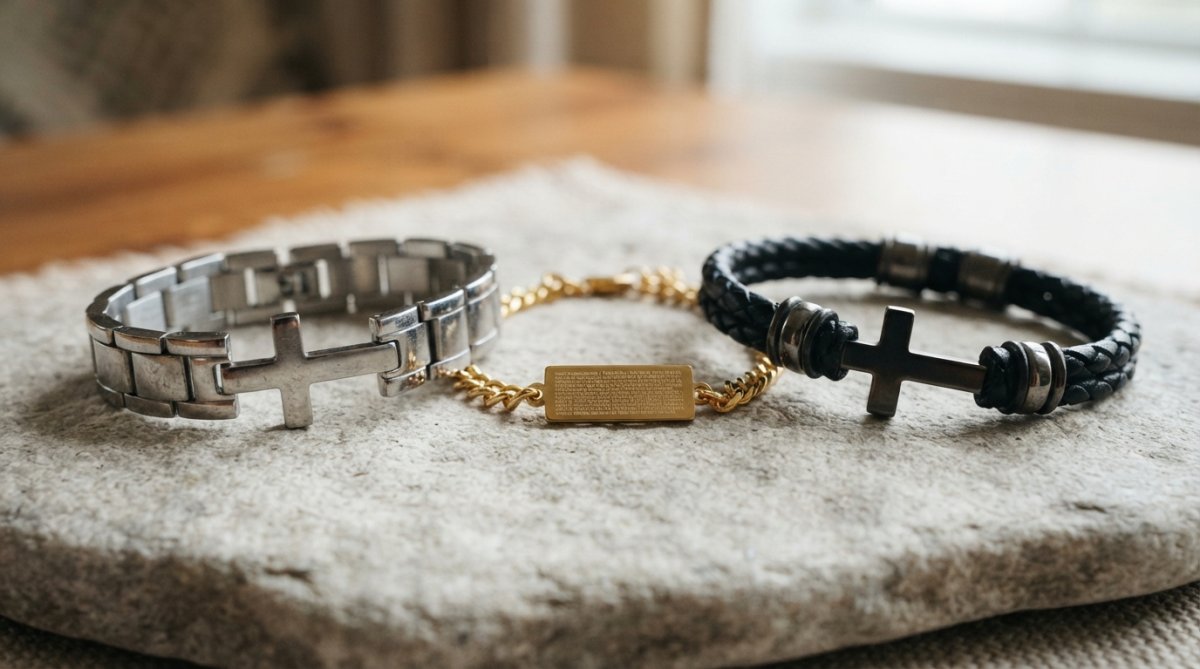
Genuine braided leather with stainless steel hardware creates a durable aesthetic and develops character over time, becoming more comfortable as it molds to your wrist.
Hypoallergenic Profile: Leather is naturally hypoallergenic. For severe metal allergies, a full-leather bracelet with stainless steel clasp worn on the outside of the wrist works well. Vegetable-tanned leather is safest.
Hardware quality is critical, a stainless steel magnetic clasp or heavy-duty spring ring ensures security during active use.
Material Durability Comparison at a Glance
| Material | Water Resistance | Tarnish Risk | Hypoallergenic | Maintenance | Longevity (Daily Wear) |
|---|---|---|---|---|---|
| 316L Stainless Steel | Excellent | None | Yes (nickel-free) | Minimal | 5+ years |
| Sterling Silver (nickel-free) | Good | High | Yes | Regular polishing | 3-5 years |
| Gold-plated (E-Coat, nickel-free base) | Good | Moderate | Conditional | Occasional | 2-3 years |
| Braided Leather + Stainless Hardware | Good | None | Yes | Conditioning | 3-5 years |
This table reflects typical wear patterns for someone wearing the bracelet 5-7 days per week in normal conditions (showers, occasional swimming, light exercise). Actual longevity depends on clasp quality, protective coatings, and care practices.
Waterproof Christian Bracelets for Active Lifestyles
For swimming, showering, exercise, or outdoor work, your bracelet must resist damage from freshwater, chlorine, and salt water.
Stainless steel bracelets are inherently water-resistant and can be worn in showers, pools, or oceans without concern. Temporary water spots wipe away harmlessly.
Gold-plated bracelets are water-resistant only with a protective E-Coat topcoat. Without it, water accelerates plating wear.
Leather bracelets should be dried promptly after water exposure. For regular swimming, stainless steel or gold-plated options are more practical.
How to Clean Stainless Steel Religious Jewelry
Proper cleaning extends bracelet life and prevents buildup of soap residue, dead skin cells, and mineral deposits. Different materials require different care protocols.
Cleaning Stainless Steel Bracelets
For routine cleaning, soak in warm water with mild dish soap for 5-10 minutes, gently scrub with a soft toothbrush, rinse thoroughly, and dry immediately.
For stubborn buildup, create a baking soda and water paste, gently scrub, and rinse to remove mineral deposits without scratching.
Avoid harsh chemicals, bleach, wire brushes, and scouring powder, which damage finishes and scratch metal.
For nano-engraved bracelets, avoid prolonged submersion; a quick rinse and wipe is sufficient.
Store in a dry place; in humid climates, use a jewelry box with silica gel to prevent corrosion.
Cleaning Sterling Silver Bracelets
Sterling silver tarnishes naturally and requires regular cleaning, but responds well to gentle methods and can be restored to near-new condition.
Weekly Maintenance: Wipe with a soft microfiber cloth after wearing to remove oils and sweat. Store in a cool, dry place with silica gel to minimize air exposure.
Monthly Deep Clean: Soak in warm water with mild dish soap for 5 minutes, gently scrub with a soft toothbrush, rinse, and dry immediately.
Removing Tarnish: Use commercial silver polish or a baking soda and water paste with a soft cloth using gentle motions. Rinse and dry immediately.
Avoid: Never use toothpaste, vinegar, or lemon juice on engraved sterling silver, as these erode details. Avoid ultrasonic cleaners on gemstone bracelets.
Cleaning Gold-Plated Bracelets
Gold-plated bracelets require gentler handling than stainless steel to avoid accelerating plating wear.
Routine Care: Wipe with a soft, dry cloth after each wearing to remove sweat and oils, the most important step in extending plating life.
Gentle Cleaning: Soak in warm water with mild dish soap for 3-5 minutes, gently wipe with a soft cloth, rinse with distilled water, and dry immediately.
Avoid: Never use baking soda, silver polish, or abrasive cleaners. Don't soak extended periods or wear during intense sweating, swimming, or showering.
Storage: Store separately in a dry, cool place, ideally in a soft pouch to prevent scratching.
Cleaning Braided Leather Bracelets
Leather requires different care than metal, focusing on moisture management and conditioning rather than chemical cleaning.
Routine Care: Wipe with a dry cloth after wearing, especially after sweating or in humid conditions, to prevent moisture and mildew.
Spot Cleaning: Use a slightly damp cloth with mild soap for light dirt, wipe gently, and dry immediately. Do not soak.
Conditioning: Every 3-6 months, apply jewelry leather conditioner with a soft cloth, working it into the texture. Allow 24 hours to dry.
Drying: If your leather bracelet gets wet, dry it promptly with a soft cloth and allow it to air-dry in a well-ventilated area away from direct heat or sunlight. Never use a hair dryer or place it near a heater, as rapid drying causes leather to crack.
Avoid: Do not submerge leather bracelets in water for extended periods.
Choosing the Right Bracelet Size and Fit
A bracelet that's too loose will slide around and eventually fall off. One that's too tight restricts circulation and becomes uncomfortable during daily wear. The ideal fit allows one finger to slide between the bracelet and your wrist while the bracelet stays in place during normal movement.
Styling Durable Faith Bracelets for Everyday Wear
The beauty of a durable faith bracelet is that it works in virtually any setting, professional environments, casual outings, athletic activities, and formal occasions. The key is choosing a design that matches your lifestyle and personal aesthetic.
Frequently Asked Questions
What materials make a faith bracelet durable enough for daily wear?
Stainless steel (especially 316L grade) and gold-plated brass with protective coatings are the most durable choices for daily wear. Stainless steel resists tarnishing, corrosion, and scratching, making it ideal for active lifestyles. Gold-plated options with protective E-Coat finishes provide elegance while maintaining durability. Braided leather paired with stainless steel hardware also withstands daily use when the leather is genuine and stitching is reinforced. Avoid pure silver for constant wear unless you commit to regular maintenance.
Are stainless steel faith bracelets better for daily wear than sterling silver?
Yes, stainless steel is superior for daily wear. Stainless steel is naturally tarnish-resistant and corrosion-resistant, requiring minimal maintenance even with water exposure, sweat, and friction. Sterling silver requires regular cleaning to prevent tarnishing and can be damaged by chlorine and saltwater. For a faith bracelet you wear constantly, especially during exercise, showering, or work, stainless steel maintains its appearance and structural integrity far longer without upkeep.
How do I keep my religious jewelry from falling apart with everyday use?
Durability depends on construction quality and material choice. Invest in bracelets with secure clasps (magnetic or spring-ring clasps are most reliable), reinforced stitching if leather is involved, and tarnish-resistant materials like stainless steel. Avoid cheap mass-produced pieces where the chain or band fails within weeks. Handcrafted or artisan-made options typically use better hardware and construction methods. Check customer reviews specifically mentioning longevity, and choose brands that guarantee their clasps and connections won't fail under daily wear.
Will nano-engraved scripture fade if I wear the bracelet every day?
Nano-engraving technology embeds scripture at a microscopic level into a durable chip, making it extremely resistant to fading or wear. The engraved text is protected within the nano chip itself rather than on the surface, so daily wear, showering, and exercise won't diminish it. However, the durability of the bracelet overall depends on the material housing the nano chip. Stainless steel and gold-plated brass with protective coatings keep the nano chip secure and visible for years of constant wear.