Best Metals for Long Lasting Nano Engraved Necklaces

Table of Contents
- What Makes a Metal Last: Hardness, Corrosion, and Nano-Engraving Compatibility
- Gold vs Stainless Steel for Engraving: Which Holds Detail Longer?
- Tarnish Resistant Metals for Necklaces: What Actually Holds Up
- Ranking the Best Metals for Long Lasting Nano Engraved Necklaces
- How to Clean Nano Engraved Jewelry Without Damaging the Chip
- Environmental Exposure: Sweat, Showers, and Everyday Wear
- Conclusion
- Frequently Asked Questions
Last Updated: September 15, 2026
What Makes a Metal Last: Hardness, Corrosion, and Nano-Engraving Compatibility
The best metals for long lasting nano engraved necklaces are those that resist scratching, oxidation, and structural fatigue while holding microscopic detail at the surface. Stainless steel, titanium, platinum, and palladium lead this category. Gold performs well when alloyed to 14K or higher. Sterling silver needs a rhodium plating to compete.
The reason comes down to how three forces interact: surface hardness, corrosion resistance, and the metal's ability to hold an engraved pattern finer than a human hair. This guide from LodMud breaks down each metal by those criteria, so you can match the piece to how you actually wear it.
The Mohs Scale and Why It Matters for Surface Finish
The Mohs hardness scale ranks minerals from 1 (talc) to 10 (diamond). Metals used in jewelry sit in a narrow band: sterling silver around 2.5-3, 14K gold near 3.5-4, platinum around 4-4.5, and stainless steel typically 5.5-6.5 depending on alloy (Mohs Hardness Scale: Testing the Resistance to Being Scratched).
Harder is not automatically better. A metal that is too soft scratches and loses nano-engraved detail. A metal that is too hard becomes brittle and can crack under repeated stress. The sweet spot for nano-engraving sits in the middle: hard enough to resist daily abrasion, ductile enough to survive wear and tear without fracturing.
Plating Degradation, Oxidation, and Metal Fatigue
Plating degradation is the slow wearing away of a decorative layer, usually gold or rhodium, applied over a base metal. Oxidation is the chemical reaction between metal and oxygen, sweat, or moisture that produces tarnish. Metal fatigue is the weakening of a structure after repeated bending or stress.
All three shorten the readable life of a nano-engraved pendant. Plating wears at contact points first: the clasp, the chain, the edge where the pendant rubs against fabric. Oxidation clouds the surface and dulls the contrast between engraving and metal. Fatigue shows up as hairline cracks near the bail or chain attachment.
A thicker, well-bonded plating and a corrosion-resistant base metal push all three problems further out.
Gold vs Stainless Steel for Engraving: Which Holds Detail Longer?
Stainless steel holds nano-engraved detail longer than gold in most everyday-wear scenarios. Gold holds detail beautifully but softer alloys scratch more easily, and solid gold costs significantly more. The practical winner depends on whether you prioritize longevity under daily abuse or the look and feel of a precious metal.
14K Gold, Karat Weight, and Scratch Resistance
Karat weight measures gold purity in 24 parts. 14K gold is roughly 58% gold, with the remainder made up of alloys like copper, silver, or palladium that add hardness. 18K gold is about 75% gold and softer. 24K is nearly pure and far too soft for a pendant that sees daily contact.
For nano-engraved necklaces, 14K gold is the better choice than 18K or 24K because the alloy content improves scratch resistance. The engraving stays legible longer. The trade-off is color: 14K yellow gold reads slightly less saturated than 18K, and 14K white gold depends on rhodium plating for its bright finish, which means that plating will eventually need refreshing.
316L Stainless Steel and Laser Precision
316L stainless steel is a low-carbon, molybdenum-bearing alloy originally developed for marine and medical use. Its corrosion resistance comes from a chromium-rich passive layer that re-forms when scratched. That self-healing surface is why 316L holds laser precision so well.
Laser engraving on 316L produces crisp, consistent lines because the alloy is homogeneous and free of the porosity found in cast metals. There is no plating to wear through on a raw steel piece, so the engraving is permanent. When the steel is ion-plated with gold or rose gold, the plating sits over the engraved surface and needs the same care as any plated jewelry.

Tarnish Resistant Metals for Necklaces: What Actually Holds Up
Tarnish resistant metals for necklaces fall into two groups: metals that resist oxidation on their own, and metals protected by a plating or coating. Titanium, platinum, palladium, and 316L stainless steel resist tarnish inherently. Gold and silver rely on alloy choice and plating.
Tarnish is not the same as damage, but it looks like it. A tarnished pendant reads as old, and on a nano-engraved piece it obscures the very detail you paid for. The Materials science overview from the American Chemical Society explains how sulfur compounds in air and skin contact drive silver tarnish in particular.
Rhodium plating is the standard defense for sterling silver and white gold. Rhodium is a platinum-group metal that resists oxidation and adds a bright white finish. It also wears off over time, which is the honest limitation most product pages skip.
Ranking the Best Metals for Long Lasting Nano Engraved Necklaces
Ranked by how well each option holds nano-engraved detail under daily wear, stainless steel with ion plating leads, followed by titanium and tungsten, then platinum and palladium, then sterling silver with rhodium, with a short list of metals to avoid entirely.
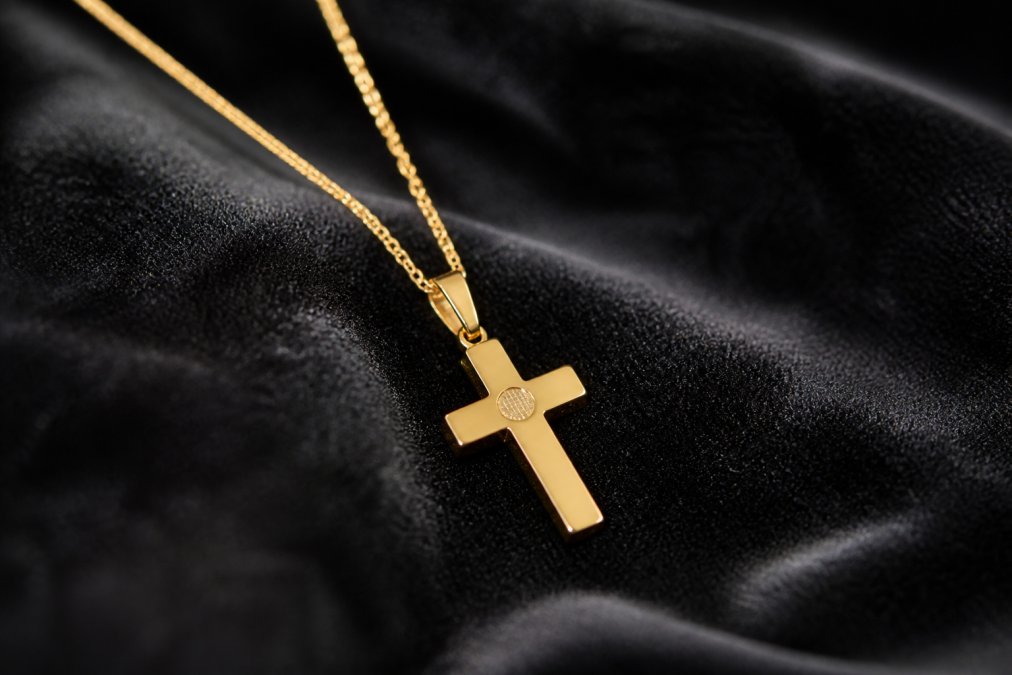
Here is how the five categories compare at a glance:
| Metal | Mohs Hardness | Tarnish Resistance | Best For |
|---|---|---|---|
| 316L steel + ion plating | 5.5-6.5 | High | Everyday wear, best value |
| Titanium / tungsten | 6-7.5 | High | Active wear, scratch resistance |
| Platinum / palladium | 4-4.5 | Very high | Heirloom pieces |
| Sterling silver + rhodium | 2.5-3 | Medium | Dress wear, budget |
| Base metals (brass, copper) | 3-3.5 | Low | Not recommended |
1. Stainless Steel with Ion-Plated Gold or Rose Gold Finish
This is the best overall option for most people. A 316L stainless steel base gives you corrosion resistance and structural strength, while ion plating adds the gold or rose gold look without the cost of solid gold. Ion plating bonds at a molecular level, so it resists flaking better than older electroplating methods.
LodMud's Rose Gold Nano Bible Disc Pendant Necklace is a clean example: 316L steel, rose gold ion plating, and a nano chip carrying the complete King James Version at the center of a polished disc. The Gold Nano Bible Heart Pendant Necklace with Crystals uses the same construction with an open-heart design and crystal accents.

The drawback is honest: ion plating is not indestructible. With heavy daily wear and no care, it can thin at contact points over years, not months.
2. Titanium and Tungsten for Everyday Wear
Titanium and tungsten are the right pick if you never take your necklace off. Titanium is lightweight, hypoallergenic, and resists corrosion through its own oxide layer. Tungsten is heavier and extremely scratch resistant, with a hardness that sits well above stainless steel on the Mohs scale.
The catch with tungsten is brittleness. It resists scratching but does not flex, so a sharp impact can crack it rather than dent it. Titanium is the more forgiving of the two for a pendant that moves against your chest all day.
3. Platinum and Palladium for Strength and Longevity
Platinum and palladium are the precious metals that hold up best long term. Both are dense, naturally white, and highly resistant to corrosion. Neither requires plating, so there is no coating to wear through.
4. Sterling Silver and Rhodium Plating: Tarnish Resistance Trade-Offs
5. Metals to Avoid for Sensitive Skin and Engraving Fade
How to Clean Nano Engraved Jewelry Without Damaging the Chip
Follow this routine:
Environmental Exposure: Sweat, Showers, and Everyday Wear
Conclusion
Frequently Asked Questions
What jewelry metal lasts the longest for everyday wear?
Platinum and titanium resist wear best because they are hard and do not corrode. Stainless steel, especially 316L, also holds up well and resists tarnish. For nano engraved necklaces, the engraving sits on a chip rather than directly on the metal, so the pendant's surface finish matters most. A scratch-resistant coating and secure setting keep the chip intact over years of daily use.
What type of metal necklace won't tarnish?
Tarnish resistant metals for necklaces include stainless steel, titanium, platinum, and palladium. Gold and rose gold finishes over stainless steel also resist tarnish when the plating is thick and protected. Sterling silver tarnishes over time and needs polishing. If you want low maintenance, choose a stainless steel base with an ion-plated finish, which keeps its color without frequent cleaning.
Does nano engraving fade on different types of metal?
Nano engraving is etched into a separate chip, not the metal itself, so fading depends more on the chip's seal and how you care for the piece. On soft metals like pure silver or brass, the surrounding surface may scratch and dull the overall look. Harder metals like stainless steel, titanium, and platinum protect the setting better. Avoid abrasive cleaners, which can cloud the chip's readability.
Is stainless steel or sterling silver better for daily wear?
Stainless steel outperforms sterling silver for daily wear. It resists scratches, tarnish, and corrosion, and it holds its shape. Sterling silver is softer, tarnishes faster, and needs regular polishing. For nano engraved necklaces, stainless steel also provides a more stable base for the chip and plating. Sterling silver suits occasional wear, but stainless steel is the practical choice for constant use.